
| Disclosure: Just to be open and honest the buttons and links you click on in the website will in most cases take you to another website where you can purchase the products I am reviewing. As an Amazon Associate I earn from qualifying purchases. |
How to Choose Your First Pair of Fly Fishing Waders
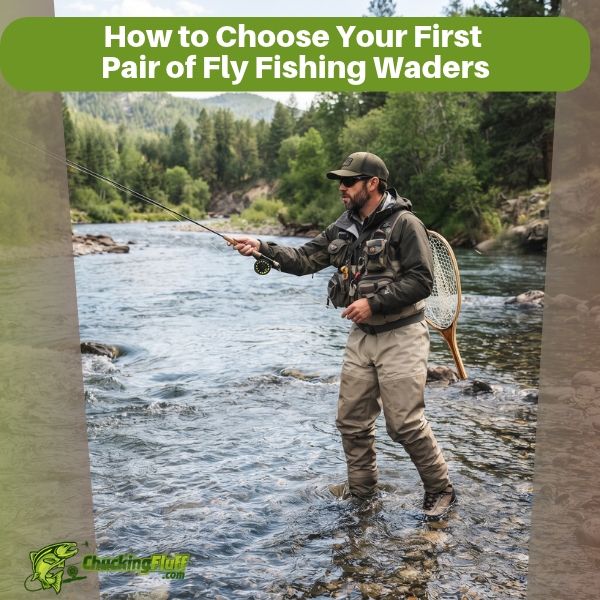
How to choose fly fishing waders comes down to five decisions made in order: where you will wade, what material suits your water temperatures, stockingfoot or bootfoot, fit, and budget. For most beginners, breathable stockingfoot chest waders with a separate pair of wading boots cover the widest range of rivers.
The order matters because each choice removes options from the next one. Once you know how deep you will wade, the material and foot style choices get smaller. Once those are settled, fit and budget are the only things left to compare. The sections below follow that sequence.
Which wader type fits you: hip, waist or chest?
Pick the type by the deepest water you plan to stand in, because a wader only keeps you dry up to its top edge. Anything above that line is wet, and a wader that is too short for the water you fish becomes a bucket the first time you step in too far.
Hip waders
Hip waders are two separate legs that reach the upper thigh and clip or strap to your belt. They are light and quick to put on, which suits small creeks and shallow stretches where you rarely wade past the knee.
The limit is obvious: one step into a pool and water pours over the top. Few anglers who fish moving rivers stay with hip waders for long.
Waist-high waders
Waist-high waders are a single garment that comes up to the belly button, usually held by suspenders. They offer more coverage than hip waders and less bulk than chest waders, and they stay cooler in warm weather.
They are less common than the other two types, so the choice of models and sizes is smaller. They work well if you wade mostly to the thigh and want ventilation, but they leave no margin if the water is deeper than you expected.
Chest waders
Chest waders reach up to the armpits and are held by shoulder straps. They allow you to wade to the top of your waist or slightly beyond, and the upper section keeps splashes and rain off your torso.
Because they cover the most, they are the standard choice for rivers where depth varies. A wading belt cinched around the chest section is a safety feature, and it is covered below.
Type Wading depth Warmth Best use Hip Up to mid-thigh Low coverage, cool Small creeks, shallow flats, short outings Waist-high Up to the belly Moderate coverage, ventilated Warm-weather wading in moderate depth Chest Up to the lower chest Highest coverage Rivers of varying depth, cold or wet conditions
If you fish more than one kind of water, or you do not yet know what your local rivers are like, chest waders are the safer first purchase. You can always fold the top down on some models when it is warm, but you cannot add height to a hip wader.
What are waders made of, and does it matter?
Material matters a great deal, because it decides how warm you are, how much you sweat, and how heavy the wader feels after a day of walking. There are three common materials, and each fits a different climate and style of fishing.
Breathable waders
Breathable waders are built from layered fabric with a membrane that blocks liquid water while letting water vapor from your sweat pass through. Think of a rain jacket that keeps the storm out without trapping your own moisture inside.
They are light, pack small, and are comfortable for hiking to a river and wading across it. They do not insulate by themselves, so you control warmth with the clothing you wear underneath.
Neoprene waders
Neoprene is the foam rubber used in wetsuits. It insulates by itself, and thickness is measured in millimeters: thicker is warmer and stiffer.
Neoprene suits cold water and standing-still fishing, such as winter outings. It is bulky, can feel hot during a walk, and restricts movement more than breathable fabric.
Rubber waders
Rubber waders, often PVC or similar, are heavy, tough and inexpensive. They keep water out well but do not breathe at all, so you can end up damp from sweat inside.
They are a reasonable choice for short outings close to the car, or for anglers who want a cheap way to try the sport. For walking long distances they are tiring.
Material Pros Cons Breathable Light, comfortable on long walks, works across many seasons with layering Costs more than rubber, can be punctured by thorns and sharp rocks Neoprene Warm on its own, flexible against the body Hot out of the water, bulky, stiff when thick Rubber Low cost, tough, simple Heavy, no breathability, clammy in warm weather
Matching material to your local water temperatures
Check what temperature your local rivers reach through the year, using a local fly shop, a state or regional fishing report, or a gauge reading posted online. If the water stays cold for most of your fishing season, neoprene or breathable waders with thick insulating layers underneath make sense. If water ranges from cold to warm over the year, breathable waders give you the most flexibility, since you add or remove layers rather than buy a second pair.
Stockingfoot or bootfoot: which should a beginner pick, and what boots go with them?
Stockingfoot waders are the better first choice for most beginners, because you choose the boots separately and get a better fit and more support. Bootfoot waders are simpler, but the boot is attached and you cannot upgrade it.
Stockingfoot waders
Stockingfoot waders end in a waterproof sock, made of neoprene or fabric. You put on the waders, then lace a pair of wading boots over the sock, much like pulling hiking boots over thick socks.
This gives you ankle support and traction suited to uneven riverbeds, and the boots can be replaced when the soles wear out without replacing the waders. You need to buy the boots separately, which raises the first purchase price.
Bootfoot waders
Bootfoot waders have rubber boots built in. You step in and go, with no laces to tie and no sock to keep dry.
They are quick to put on and keep your feet warm, and they are common in cold-weather fishing. The downsides are less ankle support, heavier weight, and the fact that the whole wader is retired when the boot wears out. Fit also depends on the one boot size the maker offers, which may not match your foot well.
Wading boots
Wading boots are built to drain water, grip wet rock and support your ankle on uneven ground. They are bought in addition to stockingfoot waders, and two choices matter: sole material and sizing.
Felt versus rubber soles
Felt soles grip slick, algae-covered rocks very well. They also carry water, mud and organisms from one river to the next, and for that reason some regions restrict or ban them. Check the rules for the waters you plan to fish before buying.
Rubber soles are allowed everywhere and last longer, and many have studs or lugs for extra traction. They grip slippery rock a little less than felt, so wade slowly until you know the bottom. For a first pair, rubber is the safer legal and practical choice. Some boots allow you to add screw-in studs.
Sizing boots over wader feet
The stocking foot of the wader is thick, and a pair of socks goes over it, so wading boots must be bigger than your street shoes. Many anglers go up a size or more over their normal shoe size, but sizing varies by brand, so follow the maker’s guidance. If you are between sizes, go larger and tighten the laces, because a cramped foot gets cold and numb.
Try the boots on while wearing the waders, with the same socks you will wear on the river. Stand on a slope if the shop has one, and check that your heel does not lift and your toes do not hit the front when you step down.
How should waders fit, and how do you get your size right?
Waders should fit loosely enough to let you move and layer, yet not so loose that fabric bunches and catches on every step. Most brands sell sizes by combinations of height, weight, chest and shoe size, so measuring first saves you from returns.
- Measure your height, chest at the widest point, waist, and inseam. Use a soft tape on bare skin or thin clothing.
- Note your shoe size. For stockingfoot waders, this tells you which foot size to choose; for bootfoot, it determines the boot size.
- Compare your numbers to the specific brand’s size chart. Do not assume a medium in one brand equals a medium in another.
- If you fall between sizes, read what the maker says. Many recommend sizing up so you can wear layers.
- Try them on at home with the layers you expect to wear, then keep the tags on until you have done the movement checks below.
- Return or exchange promptly if anything pinches, pulls at the shoulders, or restricts your stride.
Layering underneath
What you wear under your waders changes how they fit. In cold weather, fleece or synthetic base layers and thicker pants take up room, so try waders on with those layers, not in shorts.
Avoid cotton against your skin, because it holds moisture and cools you down. Synthetic or wool fabrics keep drying and insulating when damp. In warm weather, a light pair of quick-dry pants is enough, and many people size for the layers they will wear most often.
Checking for room to bend and step up
Fit is about movement more than standing still. With the waders on, run through these tests:
- Squat all the way down as if you were to release a fish.
- Lift each knee high, as if stepping over a log or a boulder.
- Reach both arms overhead and forward, as if casting.
- Walk a few steps and listen for the fabric dragging on your thighs.
If the crotch sits too low, it pulls at your legs when you step up, and that tends to wear the seams. If the torso is too short, the shoulder straps pull tight as you bend. Fabric that bunches heavily at the knees or ankles suggests the wader is too long for you.
Spend first on fit, safety features and durability, then on convenience. A well-fitting mid-priced wader is a better choice than a premium one that does not suit your body.
What a lower price costs you
Lower-priced waders usually use fewer fabric layers, less reinforcement in high-wear areas, and simpler seams. They can be perfectly good for occasional outings, and they let you try the sport without a big commitment.
The tradeoffs are typically shorter life, less comfort during long days, fewer size options, and thinner or no warranty support. If you fish rarely, or you are unsure you will keep going, this is a reasonable place to start.
What a higher price buys
Higher-priced waders typically offer tougher or more layered fabric, reinforced knees and seat, a cut shaped for movement, and a wider range of sizes. Many also come with warranty or repair services, which can matter more than the sticker price if you fish often.
Pay for these if you fish frequently, walk through brush, or wade rocky rivers where abrasion is constant. The gain is durability and comfort more than any change in how the wader keeps you dry.
Useful features: pockets, gravel guards and belts
A few features are worth checking regardless of price:
- Wading belt: Cinches around the waist of chest waders. If you fall, it limits how much water enters the legs, which helps keep you buoyant and able to stand.
- Gravel guards: Stretchy cuffs that fit over the top of your boots on stockingfoot waders, keeping sand and small stones out of your boots.
- Pockets: A chest pocket for flies and a few tools is useful. Extra pockets add weight and cost.
- Zippers: Waterproof front zippers make it easier to relieve yourself and to vent heat, but they add cost and are another part that can fail.
Feature Must-have Nice-to-have Correct fit and sizing Yes Wading belt (or a belt loop to attach one) Yes Gravel guards (stockingfoot) Yes Reinforced seat and knees Yes Waterproof front zipper Yes Several pockets Yes Fold-down top Yes Hand-warmer pocket Yes
How do you care for waders so they last?
Rinse, dry fully and store them loosely after each trip, because most wader damage comes from sitting wet, being folded tightly and sitting in heat. A few minutes of care after each outing extends their life.
- Rinse: Hose the waders off with fresh water after each trip, especially after salt, mud or sand. Rinse boots too.
- Dry: Turn the waders inside out if you can, and hang them somewhere airy and out of direct sunlight, which can break down the fabric over time. Dry the boots separately, with the insoles removed.
- Store: Hang them by the shoulders or the feet in a cool, dry place, or fold them loosely. Do not crush them in a hot car trunk or shove them into a small bag for weeks.
- Spot leaks: Look for damp patches on your base layers after a trip. Check the seams and high-flex areas such as knees and crotch. Many anglers turn waders inside out, put them in light, and spray the outside with water to see where droplets come through.
- Wash occasionally: If the fabric is grimy or smells, follow the maker’s washing instructions. Use a gentle cleaner made for technical fabrics, not regular detergent with additives.
Simple field and home repairs
For a small puncture in the field, a strip of waterproof repair tape sticks well to a dry spot and holds until you get home. Dry the area first, because tape does not stick to wet fabric.
At home, use a repair kit made for your wader material. Breathable waders often use a flexible urethane-based sealant or adhesive patches, while neoprene uses neoprene cement. Clean and dry the spot, follow the instructions on the product, and give it the full cure time before you wade again. Large tears and failed seams are better sent to the maker or a repair service.
What mistakes do first-time wader buyers make most often?
Most first-pair mistakes come from buying for the wrong water, the wrong size, or the wrong price. These are the common ones, with a quick fix for each.
- Buying hip waders for rivers. Water spills over the top in the first deep step. Fix: choose chest waders unless you only fish shallow creeks.
- Choosing size by street clothing. Wader sizing follows its own chart. Fix: measure yourself and compare with the brand’s chart.
- Trying them on in shorts. In the cold you will wear layers, and the waders may then be tight. Fix: try them on with the layers you expect to wear.
- Skipping the boot size check. Boots that fit over the wader foot are bigger than street shoes. Fix: try boots on while wearing the waders and thick socks.
- Ignoring local rules about felt soles. Some waters do not allow them. Fix: check regulations and choose rubber if in doubt.
- Not wearing a wading belt. Water can fill the legs of chest waders after a fall. Fix: wear the belt snug over the wader, every trip.
- Buying neoprene for a warm climate. It will be hot and sweaty. Fix: choose breathable and adjust layers.
- Storing them wet. Mildew and seam failure follow. Fix: dry them fully after each trip.
- Buying on price alone. A cheap wader that does not fit is uncomfortable. Fix: fit first, then features, then price.
What should you do before you buy, and what do beginners ask most?
Before you spend anything, settle the questions that narrow your options: the depth you will wade, the water temperatures, and your measurements. These steps put that into practice.
- Write down the rivers or lakes you expect to fish, and the deepest water you plan to wade.
- Find out the typical water temperature range in your fishing season from a local fly shop or fishing report.
- Check whether felt soles are allowed on your waters.
- Measure your height, chest, waist, inseam and shoe size.
- Choose a material and foot style, then compare size charts for models that fit.
- Try on waders and boots with the layers and socks you will wear, and do the squat and step-up tests.
- Confirm the return policy before you wade in them, and keep the tags on until you are sure.
Frequently asked questions
Do I need waders in summer? Not always. When both air and water are warm, many anglers wade wet in quick-dry pants and wading boots. Waders are still useful in summer if your river is fed by cold water, such as snowmelt or a dam release, or if mornings are cool.
Should my first waders be chest or hip? Chest waders suit most beginners because they cover the widest range of depths. Hip waders are only sensible if you will fish shallow creeks and never wade past mid-thigh.
How long do waders last? There is no fixed lifespan. It depends on how often you fish, what the ground is like, how well you dry and store them, and the quality of the wader. Rinsing, drying fully and repairing small leaks early extend their life.
Can I use hiking boots with stockingfoot waders? It is better to use wading boots. They are built to drain, to fit over the thick wader foot, and to grip wet rocks. Hiking boots soak up water, dry slowly and are often too snug over the wader foot.
Do I need a wading staff? A staff is not required, but it gives you a third point of contact on fast water or uneven, slippery bottoms. If your local rivers are swift or rocky, it is a useful addition once you have your waders and boots.
AFFTA Grain Weights Vs. Head Tapers: The Confusion
Must-Have Accessories For Beginner Fly Fishers
Essential Wader Accessories Every Beginner Should Have
About Author
