
| Disclosure: Just to be open and honest the buttons and links you click on in the website will in most cases take you to another website where you can purchase the products I am reviewing. As an Amazon Associate I earn from qualifying purchases. |
Do You Need a Spare Spool? A Beginner’s Guide to Extra Fly Reel Spools
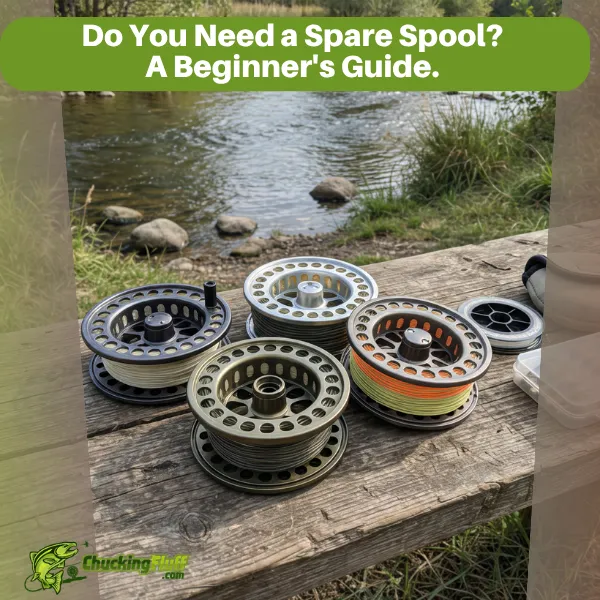
Most beginners do not need a spare fly reel spool on day one. One spool with one floating line covers dry flies, nymphs and light streamers. A spare spool earns its place when you want a second line type, such as a sinking line, and your reel sells matching spools separately.
What does a spare spool actually do?
A spare spool holds a second fly line, with its own backing, so you can change lines without buying another reel. The reel frame stays on the rod and the spool is the part that comes off. The line wrapped around it comes with it.
Without a spare, changing from a floating line to a sinking line means stripping one line off and winding the other on. That takes a while, and you have to find somewhere to put the line you removed. With a spare spool, the second line is already wound on and ready to go.
This guide does not cover how drag, backing and line weight work, because the reel articles on this site already do. The one thing to keep in mind here is that each spool carries its own line and backing, so a spare is a complete second setup in a smaller package.
Do beginners really need a spare spool?
Usually not. A beginner learning to cast and read water is best served by one rod, one reel and one floating line that matches the rod’s weight rating. That combination handles the most common beginner situations: dry flies on the surface, nymphs under an indicator, and small streamers.
If you are building a dry fly kit, one reel with one floating line is the whole job. The guide to choosing your first dry fly rod and reel setup walks through that.
You can skip the spare spool if:
- You have not yet decided what kind of water you will fish most.
- You are still learning to cast and fish mainly floating lines.
- Your budget is tight and flies, leaders and tippet are still on your list.
- Your reel does not sell spare spools separately.
Money spent on a second spool before you need one is money that could have gone toward gear you will use every trip.
When does a second spool earn its place?
A second spool earns its place when you regularly fish with two different lines on the same rod. The most common case is a floating line for surface and shallow work and a sinking line for getting a fly down deep.
Other situations where a spare makes sense:
- You fish different water with one rod. Shallow, clear runs call for one line and deep pools or still water may call for another.
- You want a quick backup. If a line gets damaged or badly tangled, a loaded spare gets you fishing again without a repair session on the bank.
- You are getting into streamer fishing. If that is where you are heading, the piece on streamer retrieve speeds for trout shows how you will be fishing, and you can judge whether a second line fits that style.
- You change lines often. If you are tired of re-spooling at home between trips, a second spool ends that chore.
One limit applies in all of these. Both spools feed the same rod, so both lines should match the line weight your rod is rated for. A spare spool gives you a different line type, not a different rod.
Is a spare spool or a second reel the better buy?
For one rod, a spare spool is usually the better buy, and a second reel makes sense when you own two rods. A spare spool lets one reel serve one rod with two lines. A second reel lets two rods stay rigged at the same time.
|
Spare spool |
Second reel |
|
|---|---|---|
|
Swap time |
Short, but you re-thread the rod |
None if each reel stays on its own rod |
|
Cost |
Often lower, though some premium spools are close to a reel’s price |
Higher |
|
Space in your pack |
Light and small |
Heavier and bulkier |
|
Two rods ready at once |
No |
Yes |
|
Depends on reel model |
Yes, must match |
No |
A second reel is also the only option if the reel you own or want does not sell spools separately. Compare the listed price of the spool against a complete reel before you decide, since the gap varies between brands.
Will any spool fit my reel?
No. Spools are built for specific reel models, and in most cases a spool from another maker or another model will not fit. That includes cassette-style reels, which are designed around quick spool changes but still need a spool made for that exact reel.
Run through this checklist before you buy:
- Match the exact reel model and size. A reel family often comes in several sizes, and each size has its own spool.
- Check for revisions. Makers sometimes update a reel design, and a spool for an older version may not fit the newer one.
- Confirm the seller names your reel. The listing should state which reels the spool fits.
- Check line capacity. Make sure the spool holds the line weight you want plus enough backing. The reel guide on this site explains line weight and backing.
- Check that the spool is sold alone. Some reels are only sold complete.
When in doubt, buy from the reel’s maker or an authorised seller, and ask before buying if the listing is unclear.
How do you swap a spool on the water?
Swapping a spool takes a few minutes and goes smoothly if you do it somewhere stable, away from the water’s edge, so no small part drops in. Release methods differ between reels, so check your reel’s manual for the exact release.
- Reel in all the slack and secure the fly in the hook keeper.
- Reel in until only the leader is left outside the rod tip, then pull the leader back out through the guides.
- Release the spool from the reel following the maker’s instructions, and set the used spool aside.
- Fit the new spool until it seats and locks in place.
- Feed the leader and line end through the rod guides, starting at the one closest to the reel and finishing at the tip.
- Tie on a fly or tippet and make sure the spool turns freely before you cast.
Store each spool in a pouch or sealed bag so the line stays clean and tangle-free. A small label noting the line type saves guessing later.
Spare Fly Reel Spool FAQs
Do I need a spare spool if I only fish dry flies?
Usually not. A floating line does the job for dry fly fishing, so a second spool adds little until you want a different line type.
Can I use a spare spool from a different brand?
In most cases no. Spools are made for particular reel models, so buy one that the seller lists as fitting your exact reel.
Does a spare spool come with fly line?
That depends on the seller. Some spools are sold empty and some are sold loaded, so read the listing before you order.
Can I put a different line weight on a spare spool?
The reel’s recommended line range sets the limit, but the rod’s rating is what matters in practice. Match any line to the weight your rod is rated for, or the rod will not cast it well.
How should I store a spare spool?
Keep it in a pouch or bag, away from direct sun and heat, with the line type labelled. That protects the line and keeps it ready for the next trip.
So, should you buy a spare spool?
Buy a spare spool when you already know you will fish a second line type on the same rod. If you are still on one floating line and learning the basics, the money does more good elsewhere. If you own or plan to buy two rods, a second reel may suit you better than a spool.
Check whether the reel you are considering sells spare spools separately, then compare options through the links in this guide before you buy.

How to Store Fly Fishing Rods Between Sessions
Fly Fishing Lines Explained – A Guide for the Beginner
How to Trout Fish with a Fly Rod, the Basics!
About Author
