
| Disclosure: Just to be open and honest the buttons and links you click on in the website will in most cases take you to another website where you can purchase the products I am reviewing. As an Amazon Associate I earn from qualifying purchases. |
How to Choose Your First Dry Fly Rod and Reel Setup
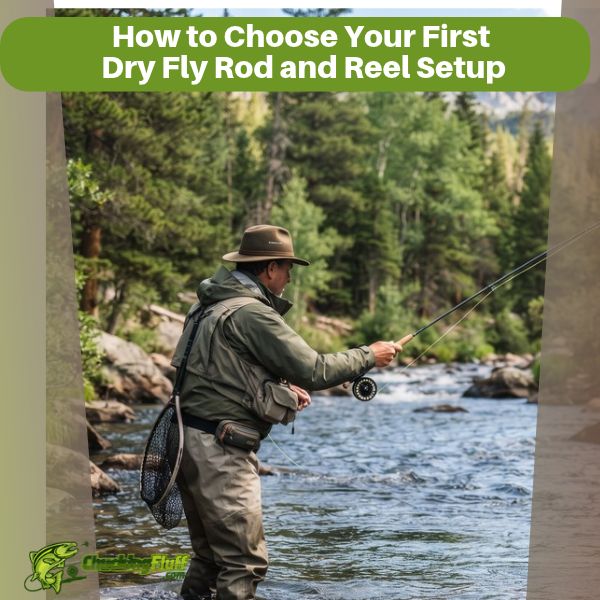
A good dry fly rod and reel setup for beginners is a 4 or 5 weight rod around 8’6″ to 9′ long, a reel balanced to the rod, a weight-forward floating line, and a tapered leader. That combination casts light flies gently, lets you mend and pick up line easily, and handles typical trout. The rest of this guide explains why each piece matters.
What makes a dry fly rod different from any other beginner rod?
A dry fly rod has to put a light fly on the water softly and let you pick it up again without spooking fish. A floating fly sits on the surface where trout can see the line, leader and splash of a clumsy cast. Nymph and streamer rods can be heavier and stiffer because the fly lands under the surface and hides the mistake.
Three things follow from that. The rod should cast short and medium distances accurately, since most dry fly fishing happens within 30 feet or so. It should be light enough to hold up through a day of repeated casts. And it should be long enough to lift line off the water and control drag.
That does not mean you need a special “dry fly only” rod. A general-purpose trout rod in the right weight and length works well for dries. You are choosing the version of a general rod that suits floating flies, and the next sections cover what that looks like.
Which rod weight and length should you start with?
For most beginners on trout streams, a 5 weight at 9 feet is the safest first rod, with a 4 weight at 8’6″ to 9′ as a good alternative if your water is small and your flies are light. Rod weight describes how heavy a line the rod is designed to cast, and it sets how delicate or powerful the rod feels.
Lighter rods land flies more gently and make small fish more fun. Heavier rods handle wind, bigger flies and larger rivers better. A longer rod helps with line control and keeping line off the water, while a shorter rod is easier in brush and tight banks.
Rod weight and length Best water Fly size Trade-off 3 weight, 7’6″ to 8′ Small, brushy creeks Small, delicate flies Struggles in wind and on bigger water 4 weight, 8’6″ to 9′ Small to mid-size streams Small to medium flies Gentle presentation, but less forgiving in strong wind 5 weight, 9′ Mid-size rivers and mixed water Small to large dries Slightly heavier landing, but the most versatile 6 weight, 9′ Large rivers, windy conditions Large dries, bulky flies Often more rod than a beginner needs for small trout
If you fish several kinds of water and can only buy one rod, choose the 5 weight at 9 feet. If nearly all your fishing will be on narrow, overgrown streams, a shorter 3 or 4 weight will be easier to cast without catching trees. If you are unsure what flies to start with, the guide to the best dry flies for beginners will help you match fly size to rod before you buy.
Does rod action matter for a first dry fly rod?
Yes, action matters, and a medium-fast action is a good first choice. Action describes how much of the rod bends under load. A fast rod bends mainly near the tip, a slow rod bends deeper into the blank, and medium-fast sits between them.
For dry fly fishing, a rod that flexes a little more than a stiff fast-action model makes it easier to feel the cast load. That feel helps beginners time their casts. Very stiff rods can punish a late or rushed stroke, and the line often collapses on the water in a heap, which spooks fish.
A very slow rod has its own problem: it can feel soft and make accurate casting harder in wind. Medium-fast is the compromise that forgives early mistakes and still has enough backbone to grow with you.
When a product listing does not state the action, read reviews from other beginners or look for descriptions like “forgiving”, “moderate” or “all-round trout”. If a rod is marketed for distance casting or saltwater, skip it for this job.
How much should a beginner care about the reel?
A beginner should care about the reel mostly for fit and reliability, and very little for features. In dry fly fishing for trout, the reel mainly stores line and gives you something to play a fish on when it runs. Most trout are landed by stripping line in by hand, so you rarely need a high-end drag.
What matters:
- Line weight match. The reel should be rated for the same line weight as your rod (a 5 weight reel for a 5 weight rod, or a model that covers a range including it).
- Balance. A reel that is very heavy for a light rod makes the tip feel dead, and one that is too light leaves the rod butt-heavy. A reel in a matching size usually balances well.
- A smooth, simple drag. It does not need to be expensive. It needs to release line without jerking and hold when you set it.
- Easy line changes. A spool that comes off and goes on without fuss helps when you want to swap lines later.
What does not matter much at the start: sealed drag systems, machined aluminium finishes and brand names. Money spent on a better rod and a proper line goes further than money spent on a fancy reel. Our site has more on what separates good beginner reels from overpriced ones if you want a budget-oriented look at the whole kit.
Which fly line and leader finish the setup?
A weight-forward floating line that matches your rod weight is the right line for dry fly fishing. Weight-forward means the heavier portion sits near the front of the line, which helps you load the rod and turn the fly over with less effort. Floating means the line stays on the surface, so you can pick it up cleanly and control drift.
Buy the line weight printed on your rod, for example 5 weight line on a 5 weight rod. Going one weight up is a trick some anglers use to load a stiff rod, but as a beginner, start with the standard match.
The leader is the clear, tapering length between the fly line and the fly. A tapered leader around 9 feet long is a common starting point because it turns a dry fly over gently and puts distance between the thick line and the fish. The final section, the tippet, is where beginners often go wrong by choosing a diameter that is too thick, and it has its own guide: what tippet size to use for dry flies.
Check that your line and leader are in good shape before every trip. A cracked or dirty line sinks, and a floating line that has started to sink makes good casts look bad.
Should you buy a combo or build the setup yourself?
For a first dry fly setup, a decent combo is usually the simpler route, as long as the rod weight and length suit your water and the line is a weight-forward floater. Combos pair a rod, reel and line that already match, which removes the most common beginner error. If you want the full case, read why a fly fishing combo is good for beginners. Building separately makes sense once you know what you want to change, such as a better rod with the reel you already own.
What mistakes do beginners make when buying a dry fly setup?
Most mistakes come from buying more, or less, than the job needs. These are the ones that cost beginners the most:
- Buying a rod that is too heavy. A 7 or 8 weight is built for big flies and bigger fish, and it lands dry flies hard on small streams.
- Choosing the wrong length for the water. A 9-foot rod is awkward on a narrow, brushy creek, and a short rod makes line control harder on open rivers.
- Mismatching line weight and rod weight. A line that does not match the rod makes casting harder, and beginners often blame their technique instead.
- Spending most of the budget on the reel. For trout dry fly fishing, the rod and line decide how the setup performs.
- Buying a stiff, fast-action rod too early. It can feel exciting in a shop and frustrating on the water.
- Skipping the leader and tippet. The best rod still spooks fish if the end of the line is too thick.
- Choosing a sinking or specialty line. Dry fly fishing needs a floating line.
Fixing these before you buy saves you from replacing the whole setup in a few months.
Which setup fits which beginner?
Pick by the water you will fish most and the budget you are working with. The three beginner situations below cover most buyers.
- Small, brushy streams, tight budget: A 3 or 4 weight rod, 7’6″ to 8’6″, medium-fast action, with a matching reel and a weight-forward floating line. Short casts and light flies are the whole job here, so a smaller rod is easier to use.
- Mixed water, one rod only, mid budget: A 5 weight, 9-foot, medium-fast rod with a matching reel and a weight-forward floating line. This is the most flexible first setup and the one to choose if you are unsure.
- Bigger rivers or windy days, comfortable budget: A 5 or 6 weight at 9 feet, still medium-fast, with a reel balanced to the rod and a weight-forward floater. Spend the extra on the rod and line before the reel.
Whichever setup you choose, practise casting and drifting before you worry about upgrades. The article on dry fly presentation mistakes that spook fish covers what to work on first once you are on the water.
FAQ
What size rod is best for dry fly fishing?
A 5 weight at 9 feet is the best all-round choice for beginners. A 4 weight at 8’6″ to 9′ suits smaller streams and lighter flies.
Can I use a nymphing rod for dry flies?
You can, but it is not ideal. Rods built for nymphing are often longer and designed for tight-line contact, which can make casting a floating line feel awkward. A general trout rod handles dry flies better.
Do I need an expensive reel for trout?
No. A reliable reel with a smooth, simple drag that matches your line weight is enough. Most trout are landed by hand-stripping line, so drag performance matters less than it does for bigger fish.
What fly line should I buy for dry flies?
Buy a weight-forward floating line in the same weight as your rod. It casts easily, floats well and is simple to pick up off the water.
Is a 4 weight or 5 weight better for a first rod?
Choose a 5 weight if you want one rod for varied water, wind and larger flies. Choose a 4 weight if your streams are small and your flies are light, because it lands more gently.
Conclusion
A good first dry fly setup is a medium-fast 4 or 5 weight rod, a reel matched to it, a weight-forward floating line and a tapered leader. Pick the weight and length for the water you will fish most, and put your money into the rod and line before the reel. Once the gear is sorted, the fishing itself is where you improve.
Browse the recommended rod, reel and line picks for each of these beginner setups, then read the guide to dry fly presentation mistakes to decide what to practise first.

Organizing Your Flies: The Importance Of Fly Boxes
The Best Wet Flies for Beginners, and How to Fish Them Without Overthinking It

How to Store Fly Fishing Rods Between Sessions
About Author
