
| Disclosure: Just to be open and honest the buttons and links you click on in the website will in most cases take you to another website where you can purchase the products I am reviewing. As an Amazon Associate I earn from qualifying purchases. |
Best Wet Flies For Beginners In The UK
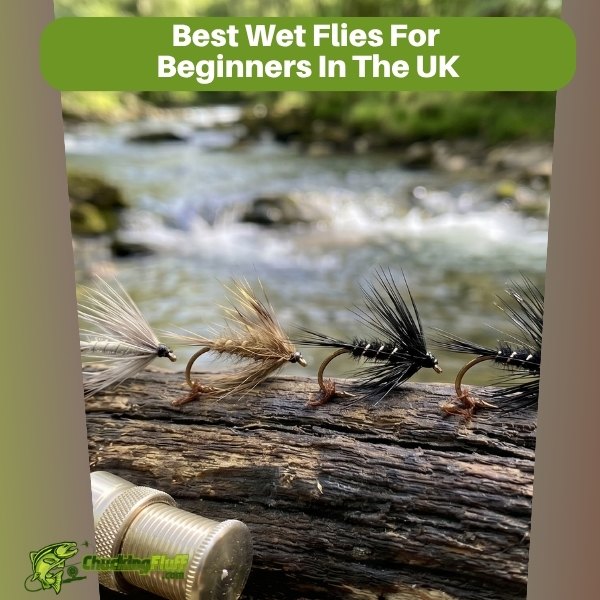
Whether you’re standing on the banks of a bubbling brook or the edge of a glassy lake, there is a certain magic to fly fishing that’s hard to put into words. For many beginners, the dream starts with a “dry fly”—that tiny speck of fluff floating on the surface, waiting for a dramatic splash. But here is a little secret from the seasoned pros: trout do about 90% of their feeding underwater.
If you want to move from “fishing” to actually “catching,” you need to dive beneath the surface. Welcome to the world of wet flies. Wet fly fishing is one of the oldest, most effective, and—luckily for you—most forgiving methods for beginners. In this guide, we’re going to break down the best wet flies to fill your box, how to fish them, and why these submerged gems are your ticket to a bent rod.
What Exactly is a Wet Fly?
To the uninitiated, a fly is a fly. But in the world of fly fishing, a wet fly is specifically designed to sink. While dry flies use buoyant materials like elk hair or stiff hackles to ride the surface tension, wet flies are tied with “soft” materials—think hen feathers, absorbent furs, and slim silhouettes—that help them break the surface and “swim.
Think of a wet fly as an underwater actor. It might be imitating a drowned insect, a swimming nymph, or a tiny baitfish. Its job isn’t to sit still; it’s to move with the current, its soft hackles pulsing like the legs or wings of a living creature.
Wet Flies vs. Dry Flies: The Main Differences
The biggest difference is visibility and engagement. With a dry fly, you see the take. It’s visual, heart-pounding, and requires a quick reflex. With a wet fly, you often feel the take. As the fly swings through the water, a trout will grab it, and you’ll feel a sharp “tug” or a heavy weight on your line.
Wet flies are also more versatile. They can be fished in the top inch of the water (the “film”) or allowed to sink several feet down. They aren’t picky about a perfect drift, either—in fact, a little bit of “drag” or movement often makes them look more appetizing to a hungry fish.
Why Wet Flies are Perfect for Beginners
If you’re just starting out, the learning curve of fly fishing can feel like climbing Everest. Between perfect loops and “drag-free drifts,” it’s easy to get frustrated. This is where wet flies shine.
- Forgiving Technique: You don’t need a world-class cast. Even a “bad” cast can catch a fish as long as the fly gets in the water and swings.
- High Success Rate: Because fish eat underwater most of the time, your fly is constantly in the “strike zone.”
- The “Swing” Factor: Most wet fly techniques involve letting the current do the work. You cast across the stream, and the water carries your fly in a beautiful arc. It’s effortless and incredibly effective.
Top 5 Traditional Wet Flies Every Beginner Needs
You don’t need a thousand patterns. You just need the right ones. These five classics have been catching fish for over a century, and they’ll work just as well for you today.
1. The Black Pennel
The Black Pennel is the “Little Black Dress” of the fly fishing world. It’s simple, elegant, and works everywhere. With its black body and silver ribbing, it mimics a wide range of small midge larvae or drowned terrestrial insects. It’s particularly deadly on overcast days or in slightly tea-colored water.
2. The Gold-Ribbed Hare’s Ear
If I were stranded on a desert island (with a trout stream, naturally), this is the fly I’d bring. The “bugginess” of the hare’s ear fur creates a silhouette that looks like almost any nymph in the water. The gold rib adds just a touch of flash to catch a trout’s eye. It’s the ultimate “generalist” fly.
3. The Partridge and Orange (Soft Hackle)
This fly looks like nothing and everything at the same time. It’s just a bit of orange silk and a mottled partridge feather. But once it hits the water, those partridge fibers pulse and breathe. It perfectly mimics an insect struggling to reach the surface to hatch.
4. The Silver Invicta
When the sun is out and the water is clear, reach for the Silver Invicta. Its flashy silver body and yellowish hackle make it look like a tiny, shimmering baitfish or a bright sedge. It’s an “attractor” pattern, meaning it triggers a predatory response even if the fish isn’t actively hunting that specific bug.
5. The Coachman
With its iridescent peacock herl body and white wings, the Coachman is easy for both you and the fish to see. It’s a classic “lead fly” (the one at the end of your line) because it has enough bulk to sink and enough flash to draw fish in from a distance.
The “Attractor” vs. “Imitative” Debate
As you browse fly bins, you’ll hear these two terms.
- Imitative flies (like the Hare’s Ear) are designed to look exactly like a specific bug.
- Attractor flies (like the Royal Coachman) don’t look like anything in nature; they use bright colors and flash to annoy or intrigue a fish into biting.
For a beginner, a mix is best. Start with an imitative fly to play it safe, but if the fish are being stubborn, tie on a flashy attractor to wake them up!
Essential Gear for Wet Fly Fishing
You don’t need a specialized “wet fly rod.” Your standard 9-foot 5-weight setup is perfect. However, pay attention to your leader. Since wet flies sink, you don’t want a leader that’s too long or too light. A 9-foot 4X tapered leader is a great starting point.
If you want to get fancy, you can use a “sink-tip” line to get the flies deeper, but for most beginners, a standard floating line with a slightly weighted fly will do the trick just fine.
How to Fish Wet Flies: Simple Techniques
This is where the fun begins. Unlike dry fly fishing, where you’re constantly mending the line to keep the fly still, wet fly fishing is all about controlled movement.
The Classic “Across and Down” Swing
Imagine you’re standing in a river facing the opposite bank.
- Cast your fly at a 45-degree angle downstream.
- Hold your rod tip high and follow the fly as the current sweeps it across the river in an arc.
- Keep a tight line! This is crucial because the fish will often “hook themselves” against the tension of the line.
Fishing the “Dangle”
Do not pick up your fly the second it stops swinging! Let it hang directly downstream of you for 5 to 10 seconds. This is called “the dangle.” Often, a trout will follow your fly all the way across the river and only decide to strike when the fly starts to “struggle” against the current at the very end.
Understanding the Water Column
The “water column” is just a fancy way of saying the space between the surface and the bottom.
- The Film: The top inch. Great for “Soft Hackles” when fish are rising.
- Mid-Water: Where most wet flies live.
- The Bottom: Where heavy nymphs go.
If you aren’t getting bites, don’t just change your fly—change your depth. Adding a tiny split shot weight a few inches above your fly can completely change your luck.
Common Mistakes Beginners Make
- Setting the Hook Too Hard: Since the line is usually tight, a massive “pro-bass” hookset will often snap your line. A gentle lift of the rod is usually all you need.
- Ignoring the Dangle: As mentioned, many fish are caught when the fly is just sitting there at the end of the swing.
- Moving Too Fast: Give the fish time to see the fly. Let the current do the heavy lifting.
Adaptability to other Locations
While many of the most famous wet fly patterns have their roots in the chalk streams of England or the lochs of Scotland, trout are remarkably consistent neighbors no matter what continent they live on. Whether you are on a high-mountain stream in the Rockies, a coastal river in Patagonia, or a crystalline run in New Zealand, the “dietary staples” of fish remain largely the same.
The beauty of the patterns we’ve discussed—like the Hare’s Ear or the Partridge and Orange—is that they don’t just mimic a specific UK insect; they mimic the idea of an insect. A “buggy” profile and a bit of soft hackle represent life in a way that is universally understood by predatory fish.
Here is a quick look at why these “UK classics” are actually global superstars:
- Universal Forage: Mayflies, caddisflies, and midges exist in nearly every freshwater ecosystem on Earth. A Black Pennel looks just as much like a drowned midge in Montana as it does in Manchester.
- The Language of Movement: The “swinging” action of a wet fly mimics an emerging insect struggling against the current. This behavior is a universal “dinner bell” for trout, regardless of their “accent.”
- Adaptability: If you find yourself in North America, you might hear these referred to as “Soft Hackles” or “Flymphs,” but the soul of the fly remains the same.
So, while this guide leans on the rich heritage of British fly fishing, don’t feel geographically tethered. These flies are passport-ready. Pack them in your box, take them across borders, and fish them with total confidence—the trout won’t know they were designed across the pond; they’ll just know they look delicious.
Conclusion: Your Path to Fly Fishing Mastery
Wet fly fishing is a bridge between the old world and the new. It’s a rhythmic, soulful way to connect with the water that doesn’t require the surgical precision of other methods. By starting with versatile patterns like the Hare’s Ear or the Black Pennel and mastering the downstream swing, you’ll build the confidence you need to tackle any river.
The next time you’re at the water and nothing seems to be happening on the surface, don’t pack up. Tie on a wet fly, cast it across the current, and wait for that unmistakable, electric thump on the line. Happy fishing!
Frequently Asked Questions (FAQs)
1. Can I fish wet flies in still water (lakes)?
Absolutely! In lakes, you’ll need to provide the movement. Cast out, let the fly sink, and use a “figure-eight” retrieve with your hand to pull the fly back slowly.
2. Should I use one fly or two?
Beginners should start with one fly to avoid tangles. Once you’re comfortable, you can try a “dropper” rig with two flies, but one is plenty to start catching fish.
3. What time of day is best for wet flies?
Wet flies work all day, but they are particularly effective during “the change of light”—dawn and dusk—when insects are most active under the surface.
4. Do I need to use floatant on wet flies?
No! Floatant is for dry flies. You want wet flies to get “wet” and sink. Some anglers even rub a little mud on their leader to help it break the surface tension.
5. How do I know if I have a bite?
You will feel it! Unlike dry fly fishing where you watch the fly, wet fly fishing is tactile. You’ll feel a pull, a tug, or a sudden heaviness. When you do, just lift your rod tip!

How to Trout Fish with a Fly Rod – Part 5 the Fly Line Profile
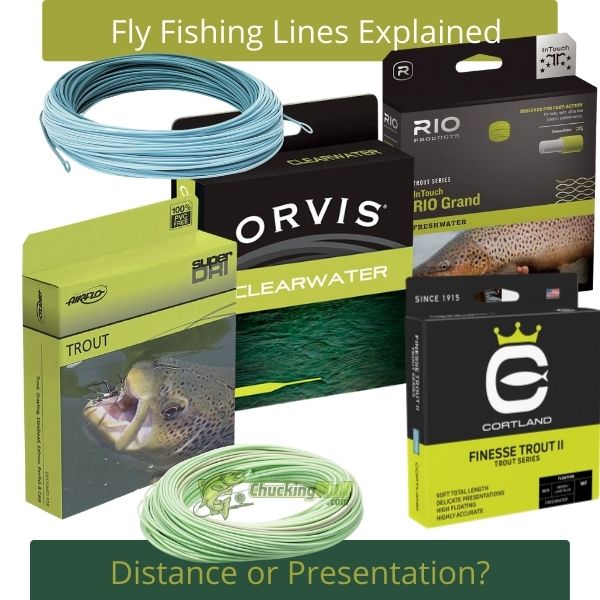
Fly Fishing Lines Explained – A Guide for the Beginner

What is Dry Fly Fishing? A Beginners Guide
About Author
