
| Disclosure: Just to be open and honest the buttons and links you click on in the website will in most cases take you to another website where you can purchase the products I am reviewing. As an Amazon Associate I earn from qualifying purchases. |
Dry Fly Fishing: Mastering The Art Of The Surface Strike
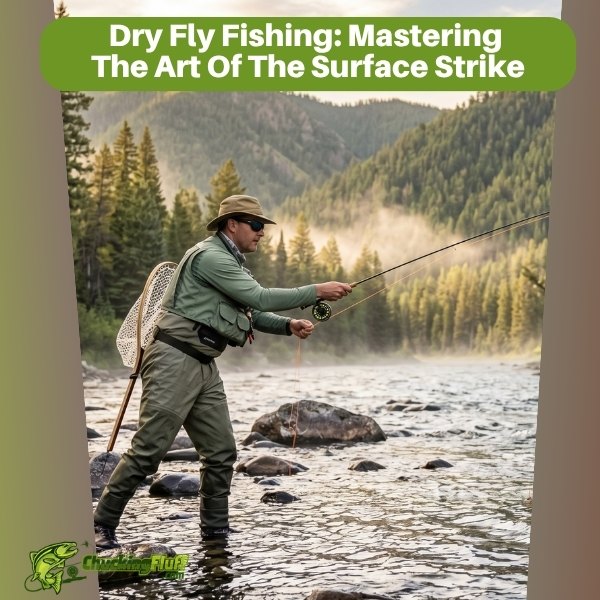
There is an almost mystical quality to dry fly fishing that sets it apart from every other discipline in the angling world. Imagine a crisp morning where the mist is just beginning to lift off a glass-calm eddy. You spot a rhythmic ring on the surface—a “sip” so delicate it barely disturbs the water. You cast a tiny bundle of feathers and fur, it floats downstream like a sailboat, and suddenly, the water erupts.
Dry fly fishing is the pinnacle of the sport because it is entirely visual. You aren’t guessing what’s happening beneath the surface; you are a direct witness to the predator-prey relationship. But as any seasoned angler will tell you, it’s also one of the most frustratingly difficult skills to master. In this guide, we’re going to break down the barriers between you and that perfect surface take.
Understanding the Magic of the Dry Fly
Why We Fish the Surface: The Visual Thrill
Why do we bother with dries when a weighted nymph dragged along the bottom often catches more fish? It’s about the soul of the sport. Dry fly fishing is like a high-stakes game of poker where you can see the other player’s hand. When a trout rises to a dry fly, it is a conscious decision to break the safety of the depths.
For the angler, the thrill lies in the suspense. That three-second window where your fly is drifting toward a rising fish feels like an eternity. Your heart rate climbs, your grip tightens, and the world shrinks down to a single point on the water. It’s pure, unadulterated adrenaline.
Essential Gear for the Dry Fly Purist
Choosing the Right Rod and Action
When you’re nymphing, you want a rod with some backbone to move heavy weights. For dry flies, you want the opposite. You need a “painter’s brush,” not a “sledgehammer.”
A medium-action rod (typically in a 3-weight to 5-weight range) is the gold standard. Why? Because a softer rod protects light tippets. When a big trout slams a tiny fly, a stiff rod will snap that thin line instantly. A medium action acts like a shock absorber. Furthermore, it allows for more delicate presentations, laying the line down like a whisper rather than a gunshot.
The Importance of the Leader and Tippet
If your fly line is the highway, the leader and tippet are the driveway to the fish’s mouth. Many beginners make the mistake of using a leader that is too short or too thick. For dry flies, you generally want a leader that is at least 9 to 12 feet long.
Why Suppleness Matters
The goal is to eliminate “drag”—the unnatural pulling of the fly caused by the current acting on the line. A supple, thin tippet (think 5X, 6X, or even 7X) allows the fly to dance independently of the heavy fly line. If your line is stiff, the fly will look like it’s being towed by a tugboat. No self-respecting trout is going to eat a “towed” bug.
Reading the Water Like a Pro
Identifying Likely Holding Spots
Trout are lazy. Well, maybe “energy efficient” is a kinder term. They want to sit in a spot where they don’t have to swim hard but where the current brings the food directly to them. Look for the “seams”—the interface where fast water meets slow water. Trout will often sit in the slow water and dart into the fast current to grab a passing insect.
The “Feeding Lane” Concept
Think of the river as a series of conveyor belts. An insect drops into the water and stays on its specific “belt” as it moves downstream. To catch a fish, your fly must be on that exact same conveyor belt. If the fish is rising three inches to the left of where your fly is drifting, it likely won’t move to get it. Precision is more important than distance.
The Entomology of the Rise
Mayflies, Caddis, and Stoneflies: The Big Three
You don’t need a PhD in biology, but you should know your bugs.
- Mayflies: They sit on the water with upright wings, like little sailboats. They drift long distances, making them easy targets.
- Caddis: These look like small moths. They tend to skitter and hop on the water, which often triggers aggressive, splashing strikes.
- Stoneflies: These are the heavyweights. They are large, clumsy, and provide a massive protein boost for trout.
Understanding Rise Forms: What is the Fish Eating?
Not all rises are created equal.
- The Sip: A tiny bubble or a small ring. This usually indicates a fish eating spent spinners or tiny midges.
- The Splash: A violent break in the surface. This usually means the fish is chasing something moving fast, like a caddis or a grasshopper.
- The Head-and-Tail Rise: You see the snout, then the dorsal fin, then the tail. This is the “classic” rise, indicating the fish is confidently feeding on mayfly duns.
Casting Techniques for a Natural Drift
The Reach Cast: Your Secret Weapon
If you only learn one specialized cast for dry fly fishing, make it the reach cast. As you finish your forward cast, but before the line hits the water, move your rod arm upstream or downstream. This “reaches” the line across the current, putting the fly upstream of the line. This gives you several extra seconds of a natural, drag-free drift before the current catches the line and pulls the fly.
Managing Drag: The Enemy of Success
Drag is the #1 reason dry fly anglers fail. If your fly is moving faster or slower than the bubbles around it, the trout knows it’s a fake. To combat this, learn to “mend” your line. A mend is a flick of the rod tip that moves the belly of the fly line without moving the fly itself. It’s like giving the fly more “slack” so it can float naturally.
Approaching the Pool: Stealth Tactics
Trout have incredible peripheral vision. If you walk up to the bank wearing a bright white t-shirt and waving your arms, the fish will be gone before you even pull line off your reel.
- Stay Low: Crouch down. Use the background (trees, rocks) to break up your silhouette.
- Wade Quietly: Don’t stomp through the water. The vibrations travel through the rocks and alert the fish.
- Observe First: Spend five minutes just watching the water before you cast. Figure out the timing of the rises and the direction the fish is looking.
Advanced Tips: Beyond the Basics
The “Skating” Technique for Caddis
While we usually preach “dead drift,” sometimes a little movement is key. When caddisflies are out, they often flutter across the surface. Giving your fly a tiny twitch or “skating” it across the surface for a few inches can trigger a predatory instinct in a trout that ignored a stationary fly.
When to Downsize Your Fly
If fish are rising all around you but ignoring your fly, the most common solution is to go smaller. If you’re using a size 14, drop to a 16 or 18. Trout are often “selective” during a hatch, focusing on the most abundant (and usually smallest) food source.
Conclusion: Becoming One with the River
Dry fly fishing is less about the gear and more about the connection. It requires patience, keen observation, and a willingness to fail. You will miss strikes. You will tangle your leader in a tree. You will spook the biggest fish of the season by stepping on a dry twig.
But when it all comes together—the perfect cast, the silent drift, and that golden moment when a wild trout ascends from the shadows to take your fly—everything else fades away. Take these tips, get out on the water, and remember: the goal isn’t just to catch a fish, but to participate in the ancient rhythm of the river.
Frequently Asked Questions (FAQs)
1. What is the best time of day for dry fly fishing? Typically, the “magic hours” are early morning and late evening (the “evening rise”). This is when water temperatures are optimal and insect activity is at its peak. However, on overcast days, hatches can happen all afternoon.
2. How do I keep my dry fly from sinking? Use a “floatant”—a gel, liquid, or powder that makes the feathers water-repellent. Also, perform “false casts” (casting back and forth without hitting the water) to air-dry the fly between presentations.
3. Why do trout keep “refusing” my fly at the last second? This is usually due to “micro-drag.” Even if the fly looks still to you, it might be vibrating or moving slightly differently than the current. Try a longer, thinner tippet or a better mend in your line.
4. Can I fish dry flies in fast water? Yes! In fast water, trout have less time to inspect the fly, so they often strike more aggressively. Look for “pockets” of calm water behind rocks or logs where the fish can sit while waiting for food to zip by.
5. What is the most versatile dry fly pattern for beginners? The Adams (or Parachute Adams) is arguably the most famous and versatile fly ever tied. It mimics a wide variety of insects and is easy for the angler to see on the water. If you only carry one fly, make it an Adams.

Embrace The Serenity: The Mental Benefits Of Fly Fishing
Can You Fly Fish Without A Leader? Challenging the Norms
Beyond Aesthetics: The Pairing Dance of Fly Reels and Rods
About Author
