
| Disclosure: Just to be open and honest the buttons and links you click on in the website will in most cases take you to another website where you can purchase the products I am reviewing. As an Amazon Associate I earn from qualifying purchases. |
Must-Have Accessories For Beginner Fly Fishers
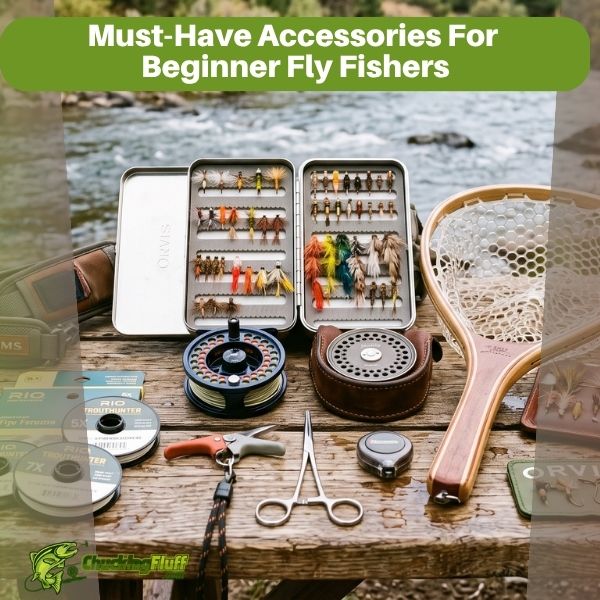
Must-Have Accessories For Beginner Fly Fishers
Walk into any fly shop as a beginner and you’ll feel it immediately — that slightly overwhelming wall of gadgets, gizmos, and tools that all seem essential and all seem expensive. Retractable this, magnetic that, a net shaped suspiciously like a tennis racket. It’s enough to make you wonder if you need a second mortgage just to catch your first trout.
Here’s the good news: you don’t. Most of what actually matters fits in a small vest pocket, costs less than a decent dinner out, and solves a real, specific problem you’ll run into on the water. Let’s cut through the marketing noise and talk about what you genuinely need, what actually helps, and what can wait until you’ve landed a few fish and know what you like.
Why Accessories Matter More Than You Think When You’re Starting Out
The Difference Between “Nice to Have” and “Actually Necessary”
New anglers often make one of two mistakes: they buy nothing beyond a rod and reel and end up frustrated when they can’t change flies efficiently or handle a fish properly, or they buy everything the shop clerk points at and end up with a vest full of tools they’ll never touch. The truth sits in the middle. A handful of accessories genuinely change whether you catch fish and whether fishing stays fun; the rest is polish you can add once you know your own habits.
Think of it like cooking. You don’t need every gadget in a kitchen store to make a good meal — but a sharp knife and a decent cutting board will change your life. Fly fishing has its own version of the sharp knife, and that’s what we’re covering here.
Building Your Foundation: The Absolute Essentials
Leaders and Tippet
If your rod and reel are the engine of your setup, leaders and tippet are the steering wheel — invisible to the fish, but absolutely critical to getting your fly where it needs to go and keeping it there once a fish takes.
Understanding Leader Taper and Length
A leader is the clear, tapered length of monofilament or fluorocarbon connecting your thick fly line to your fly. It tapers from thick (to transfer energy from the cast) down to thin (so it lands delicately and doesn’t spook fish). For most beginner trout fishing, a 9-foot leader in the 4X to 5X range is a safe, versatile starting point — long and light enough for spooky fish, sturdy enough not to snap on a decent-sized trout.
Tippet Spools: What Sizes You Actually Need
Tippet is the thin, level material you add to the end of your leader as it gets shorter from re-tying flies. Starting with two or three spools — say, 4X, 5X, and 6X — covers the vast majority of trout scenarios you’ll encounter as a beginner. Buy quality tippet from a known brand; this is genuinely not the place to save five dollars, since weak or old tippet is directly responsible for more lost fish than bad casting ever will be.
Fly Boxes
An organized fly box seems like a small thing until you’re standing streamside, fish rising all around you, fumbling through a plastic bag of tangled flies looking for the right pattern. A simple foam or slotted fly box that keeps your flies separated, dry, and visible saves you real fishing time and real frustration. Start with one mid-sized box — you don’t need six boxes on day one.
Nippers
A pair of nippers is essentially fingernail clippers built for fishing line, and you will use them constantly — trimming knots, cutting tippet, snipping tag ends. Trying to bite through modern fluorocarbon with your teeth is a great way to chip a tooth and still end up with a ragged cut. Nippers are cheap, small, and one of the highest-value purchases in this entire list.
Forceps or Hemostats
These locking, scissor-like tools do double duty: they remove hooks quickly and safely from a fish’s mouth, and they’re handy for pinching split shot or holding small flies while you tie tricky knots. A basic pair costs very little and prevents a lot of fumbling — and a lot of unnecessary stress on the fish.
Staying Comfortable on the Water
Waders and Wading Boots
If you’re fishing rivers or streams, waders and wading boots aren’t luxury items — they’re what let you actually access the water where fish live instead of casting from a muddy bank fifteen feet from where you want to be. Breathable stockingfoot waders paired with separate wading boots offer the best combination of comfort and durability for most beginners, and they’ll extend your fishing season into cold water that would otherwise end your day in minutes.
Polarized Sunglasses
This might be the single most underrated accessory on this entire list. Polarized lenses cut glare off the water’s surface, letting you actually see fish, structure, and depth changes instead of staring at a sheet of reflected sky. Beyond the practical fishing benefit, they protect your eyes from errant hooks during casting — which, as any honest angler will admit, happens to everyone eventually.
A Proper Fishing Vest or Sling Pack
You need somewhere to put all this stuff, and stuffing tippet spools into your jeans pockets gets old fast. A vest or sling pack keeps your essentials organized and within arm’s reach, so you’re not wading back to shore every time you need a new leader. Sling packs have become popular for their lighter, less bulky feel, while vests still offer more storage for anglers who like to carry a bit of everything.
Accessories That Save You From Rookie Mistakes
Floatant and Sinkant
Floatant is a gel or liquid you apply to dry flies to help them, well, float — keeping them riding high and visible on the surface rather than slowly waterlogging and sinking after a few casts. Sinkant does the opposite job, helping nymphs and wet flies break through surface tension and get down into the water column where fish are actually holding. Both are inexpensive, both live in a single small bottle in your vest, and both noticeably improve how your flies perform.
Strike Indicators
If you’re new to fly fishing, detecting a subtle strike from a trout eating a nymph underwater is genuinely one of the harder skills to develop. A strike indicator — essentially a small, buoyant bobber attached to your leader — telegraphs those subtle takes visually, turning an invisible underwater event into something you can actually react to. It’s not cheating; it’s a legitimate tool that helps beginners connect the dots between “something happened down there” and “set the hook now.”
A Landing Net
Trying to land a fish by hand, especially as a beginner still building coordination with rod and line, leads to a lot of lost fish right at the bank — the most heartbreaking moment in fishing. A landing net, ideally with a rubber or silicone bag rather than old-style knotted mesh, which is banned on most waterways now anyway, makes landing fish faster, safer for the fish, and dramatically less stressful for you.
Small Tools That Punch Above Their Weight
Zingers and Retractors
A zinger is a small retractable cord, usually clipped to your vest, that keeps your nippers or forceps attached to you instead of buried at the bottom of a pack or lost in the river the first time you set them down on a rock. It sounds minor until you’ve lost your only pair of nippers on a windy day and had to bite tippet with your teeth for the rest of the trip.
A Multi-Tool or Line Clipper Combo
Many companies now build combination tools that pack nippers, hook eye cleaners, and small hemostats into a single compact unit. These aren’t strictly necessary if you already have the individual pieces, but they’re a genuinely efficient way for a beginner to consolidate several must-haves into one purchase and one pocket.
Safety and Fish Care Accessories
Hemostat vs. Hook Removal Tools
While forceps handle most hook removal jobs, dedicated hook removal tools with a longer reach can be genuinely useful for deeper hook sets or larger fish, letting you back a hook out with minimal handling and minimal harm. If you’re planning to fish for bigger species down the road, it’s worth having one in your kit alongside your standard forceps.
Rubber or Silicone Landing Net Bags
This deserves its own callout separate from the net itself: old-style knotted mesh nets can strip the protective slime coat off a fish and damage fins, while rubber or silicone bags are far gentler. If you care about practicing good catch-and-release — and as a beginner building good habits early is worth it — this small material difference matters more than it seems.
Nice-to-Have Extras Worth Growing Into
A Wading Staff
If you’ll be fishing faster or rockier water, a wading staff functions like a third leg, providing stability and confidence on uneven or slick riverbed terrain. It’s not essential for calm, easy water, but it becomes genuinely valuable the moment you step into current that pushes back.
A Thermometer
A simple stream thermometer helps you understand water temperature, which directly affects fish activity and feeding behavior — and, especially in warmer months, helps you know when water temperatures are getting too high to safely catch and release fish at all. It’s a small, inexpensive tool that turns guesswork about “why aren’t they biting” into actual information.
Building Your Kit on a Budget: What to Buy First
If you’re working with a limited budget, prioritize in roughly this order: nippers and forceps first (cheap and constantly used), then leaders and a couple of tippet spools, then polarized sunglasses, then a basic fly box, then a net. Waders can wait if you’re starting on water you can fish from the bank in regular clothes, and extras like a wading staff or thermometer can be added later once you know how often you’ll actually need them. The goal isn’t to buy everything on day one — it’s to build a kit that grows naturally as your fishing does.
Conclusion
Fly fishing has a reputation for being gear-heavy, and it’s not entirely undeserved — but the accessories that actually matter for a beginner are a shorter, cheaper, more practical list than the fly shop wall might suggest. Leaders, tippet, nippers, forceps, a fly box, polarized sunglasses, and a landing net will carry you through the vast majority of situations you’ll face on the water. Everything else — wading staffs, thermometers, specialty tools — can wait until your own fishing tells you what you actually need. Start small, build deliberately, and let your kit grow the same way your skills do: one useful addition at a time.
Frequently Asked Questions
1. What’s the single most important accessory for a total beginner?
Nippers and a pair of forceps together, since they’re cheap, used on nearly every cast, and solve the two most common on-the-water annoyances: cutting line cleanly and removing hooks safely.
2. Do I really need polarized sunglasses, or are regular sunglasses fine?
Regular sunglasses block brightness but not glare, so you’ll still be staring at a reflective water surface instead of seeing fish and structure beneath it — polarized lenses make a genuine, noticeable difference.
3. Can I start fly fishing without waders?
Yes, especially if you’re fishing from the bank or in warm-weather conditions where wet-wading in quick-dry clothes and wading boots is comfortable; waders become more important for colder water or deeper wading.
4. Are strike indicators considered “cheating” in fly fishing?
No — they’re a widely used, legitimate tool, especially helpful for beginners still learning to detect subtle underwater strikes, and plenty of experienced anglers use them regularly too.
5. How much should I expect to spend on essential accessories as a beginner?
A solid starter kit covering leaders, tippet, nippers, forceps, a basic fly box, and sunglasses can typically be assembled for a modest amount, especially compared to the cost of the rod and reel themselves, since most of these accessories are individually inexpensive.
Organizing Your Flies: The Importance Of Fly Boxes
Different Types Of Fly Lines And When To Use Them
How to Trout Fish with a Fly Rod, the Basics!
About Author
