
| Disclosure: Just to be open and honest the buttons and links you click on in the website will in most cases take you to another website where you can purchase the products I am reviewing. As an Amazon Associate I earn from qualifying purchases. |
Understanding Trout Behavior: How Streamer Fishing Can Help You Catch More Fish
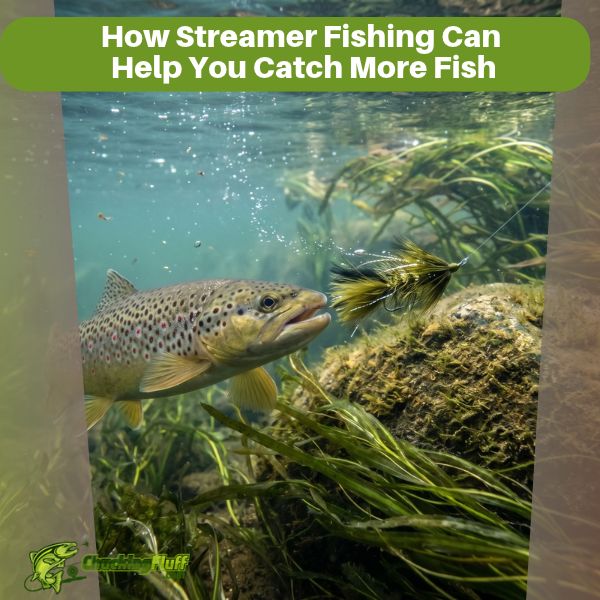
Understanding trout behavior makes streamer fishing far more productive. Trout eat streamers to prey on baitfish, defend their space, and react to food that looks easy to catch. Match your fly, retrieve, and location to the conditions, and expect fewer takes than nymphing but often bigger fish.
Why do trout chase streamers?
Trout chase streamers because a large fly looks like a meal worth the effort, or like an intruder worth driving off. Larger trout eat baitfish, sculpins, leeches, and crayfish, so a streamer fits what they already hunt.
Three motives account for most strikes:
- Predation: the fly looks like a fish or crustacean that is easy to catch.
- Territory: a trout guarding a good lie attacks anything that moves through it.
- Reaction: a fly that darts or stops suddenly can trigger a strike even when the trout is not hungry.
Set your expectations before you start. Streamer fishing usually brings fewer bites per hour than nymphing, but the fish that eat tend to be larger. Trout behavior also shifts with the season, water temperature, food supply, and fishing pressure, so a spot that produced last week may not produce today.
Where do trout ambush moving food?
Trout hold where they can reach food without fighting the current, so look for structure that breaks the flow and gives them cover. Undercut banks, root wads, boulders, and logjams are the first places to cast.
Currents matter just as much. A seam between fast and slow water delivers food past a resting trout, and slow water beside a drop-off lets a larger fish wait in comfort. If you already know how to read a run for nymphs, the same skill applies here, and our guide on how to read water for nymph fishing covers it in detail.
Approach quietly. Wade slowly, keep your shadow off the water, and cast to a spot before you step into it. Give each likely lie a few casts from different angles, then move on.
How do season and water conditions change your streamer approach?
Water clarity, flow, light, and temperature decide how far a trout will travel for your fly. In warm, clear, steady conditions fish are more willing to chase. In cold water they move less, so your fly needs to pass close to them and move slowly.
Seasons shift the picture in general ways:
- Prespawn: trout can be more aggressive and territorial.
- Spring runoff: high, fast water pushes fish toward the edges and slower pockets.
- Summer: low light, such as early morning and evening, is often best.
- Fall: territorial behavior can return.
- Winter: fish are sluggish, so work the water slowly and thoroughly.
Adjust the fly to the water. Clear water suits natural colors and gentle retrieves, while stained water suits brighter or darker flies and faster strips. Treat every follow, refusal, and miss as information, and change one thing at a time.
Which streamers should a beginner carry?
A beginner needs a few patterns that cover different prey, not a full box. Streamers come in several families: baitfish imitations, sculpins, leeches, crayfish patterns, articulated designs, and bright attractor patterns. Each has its own profile and movement.
Choose by what trout in your water eat, how deep you need to fish, how clear the water is, and how active the fish seem. A slim baitfish pattern suits clear water, a bulky sculpin suits a bottom-hugging fish, and a bright attractor helps in murky water.
If you are still working out where streamers sit among the other fly types, our guide to choosing between nymphs, dries, and streamers is a good place to start. Buy a handful of patterns, then learn how each one swims and sinks before you buy more.
How should you retrieve a streamer?
Retrieve a streamer so it looks like prey that is alive, hurt, or trying to escape. Speed and rhythm matter as much as the fly, so vary both until a trout responds.
Common approaches include:
- Swinging the fly downstream on a tight line.
- Stripping across and down.
- Stripping upstream, which keeps the fly moving against the current.
- Letting the fly drift with small twitches.
Mix long strips, short twitches, and pauses. A stop often triggers the strike, because injured prey stops moving. Keep the fly working through ambush zones, and let it hang below the rod tip at the end of the retrieve. Trout sometimes follow all the way and eat at the last moment.
What should you do when a trout follows or strikes?
When a trout follows your fly, keep it moving and do not lift the rod. Watch for a wake behind the fly, a flash under the surface, or a shape appearing in clear water. These mean a trout has noticed it.
Speed up, pause, or change direction to convince a following fish. If it turns away, cast again to the same spot, and consider a different fly if the fish keeps refusing.
When a trout does eat, use a strip set: pull the line with your hand while keeping the rod low and pointed at the fly. This keeps tension on the line if the fish misses the hook. Strikes can be hard, so be ready for runs toward wood or fast current. Land the fish quickly, keep it in the water as much as possible, and release it gently.
What gear do you need for streamer fishing?
You need a rod that casts weighted flies, a reel with a smooth drag, and a line that matches the depth you are fishing. A faster-action rod generally handles big flies more easily, and a reliable setup beats an expensive one.
Line choice depends on the water:
|
Line type |
Best for |
|---|---|
|
Floating |
Shallow water and general use |
|
Intermediate |
Slightly deeper water with a slow sink |
|
Sink-tip |
Deeper runs while keeping casting manageable |
|
Full sinking |
Deep, slow pools |
Tippet is a trade-off. Heavier tippet helps with larger fish and firmer hook sets, while lighter fluorocarbon is less visible but can reduce control. Wear eye protection and open your casting loops, because weighted streamers can hit you.
How can you learn from every outing?
Write short notes after each trip and you will learn your own water faster than any general advice teaches you. Record the water level, temperature, weather, the fly you used, where you fished, and how trout responded.
Over time those notes show patterns, such as which flies work at which flows and where fish hold in different seasons. On a slow day, change one variable at a time: depth first, then casting angle, retrieve speed, and finally the fly.
Follow local regulations and etiquette. Avoid spawning areas, handle fish carefully, and stay off fragile banks so the fishery stays healthy.
FAQs
Is streamer fishing good for beginners?
Yes. The casting is simple and you can feel strikes easily. Expect fewer bites than nymphing at first, and start with one or two patterns.
What is the best time of day to fish streamers?
Low light, such as early morning and evening, often works well, especially in summer. In cold weather, the warmer part of the day can be better.
Should I use a floating or sinking line?
A floating line covers many situations and is a sensible first choice. Move to a sink-tip or sinking line when you need to fish deeper water.
Why do trout follow my streamer but not eat it?
The fly may be moving too predictably or may not suit the conditions. Change the speed, add a pause, switch direction, or try a different pattern.
How many streamers do I need?
A few patterns in different profiles and colors are enough. Learn how each one behaves before adding more.
Conclusion
Streamer fishing rewards anglers who watch how trout react and adjust. Start with a small selection of flies, fish the structure where trout wait, and keep notes. Each trip will show you more about how fish behave in your water.
Fly Combo Buying Guide For Budget-Conscious Anglers
Exploring Different Types Of Fly Materials

Should You Hang Waders? Making a Decision for Proper Care
About Author
