
| Disclosure: Just to be open and honest the buttons and links you click on in the website will in most cases take you to another website where you can purchase the products I am reviewing. As an Amazon Associate I earn from qualifying purchases. |
How to Read Water for Nymph Fishing Success
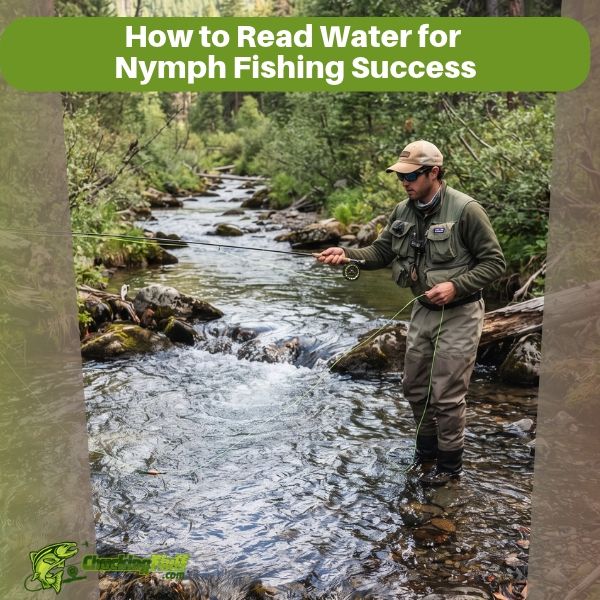
You tied on a good nymph, the rig is balanced, and the cast lands where you aimed it. Then an hour goes by without a bump. Most of the time the fly is fine and the water is the problem. Knowing how to read a trout stream for nymph fishing lets you spend your first hour on the few spots that hold fish instead of a hundred yards of water that holds none.
This guide covers the step before the cast. You will learn what trout need from a spot, which five kinds of water to fish first, which stretches to walk past, and how to adjust weight and drift for each. Rigging is covered elsewhere on this site, so here we focus on where the rig goes.
Why you can have the perfect fly and still catch nothing
A river looks like one long, continuous place. To a trout it is a handful of small, useful spots separated by large stretches that are not worth the energy to sit in. Fish are not spread evenly across the water. They crowd into the places that meet their needs and leave the rest almost empty.
A nymph only works if it passes through the fish’s space. A trout holding on the bottom in a slow pocket will not move six feet sideways for a fly drifting along the surface current. It will take what comes close, at its own depth, at a speed it can easily intercept.
That makes two ways to fish empty water. You can cast to a place with no fish in it, or you can cast to a good place with a fly drifting too high, too fast or too far away. Reading water fixes the first problem. Matching your weight and drift to the spot fixes the second.
What trout want from a spot: food, shelter and an easy ride
Every holding spot offers the same three things, and once you can see them you can find them anywhere.
- Food. Nymphs and other insects drift down the river in the current. Trout sit where that food is funneled past them, often along the edges of faster water.
- Shelter. Depth, boulders, logs, undercut banks and broken surface all give a trout cover from birds and from anglers. A fish with nothing overhead and nothing beside it is exposed, and it will move.
- An easy ride. Swimming against fast current burns energy. A trout would rather sit in slow water right beside the fast water that carries its food, so it can step out, eat and step back.
The third point is the most useful one for a beginner. Look for places where fast and slow water touch. A trout in that spot gets food delivered by the fast lane and rests in the slow one.
When you scan a stretch, ask three questions of each patch of water. Does the current bring food through here? Is there something to hide behind or under? Can a fish sit here without working hard? A spot that answers yes to all three deserves several careful casts. A spot that answers yes to none can be skipped.
The five bits of water worth your first casts
These five show up on almost every trout stream, from a small creek to a big river. Learn to spot them and you can read a new stretch quickly.
Seams
A seam is the line where two currents of different speed meet, usually visible as a change in the surface texture or a thin line of foam and bubbles. Trout hold on the slow side and dart into the fast side to grab food. Cast so the nymph drifts along that line, not in the middle of the fast water and not in the middle of the slow water. Aim for the border, and put the fly a foot or so inside the slow edge first.
Runs
A run is a stretch of moderately deep water with a steady, even flow and a surface that looks smooth but not glassy. It is where many beginners do best, because the current is manageable and the depth gives fish cover. Fish the run in lanes: cast, drift through, then move your next cast a little farther over until you have covered the width.
Pocket water
Pocket water is a section full of boulders where the current splits and rejoins. Each rock creates small pockets of calmer water in front of it, beside it and behind it. Trout sit in those pockets, and each one may hold a fish or two. Treat every pocket as its own target. Drop the nymph in just upstream, let it sink and drift through for a short, well-aimed drift, then move to the next pocket. Short drifts are normal here because the pockets are small and the current around them is complicated. If you fish tight, brushy water, Euro nymphing in small streams covers how to adapt.
Tailouts
The tailout is the shallow, smooth lip at the downstream end of a pool, where the water speeds up before it spills into the next riffle or run. Trout often feed here, because the current gathers food and carries it across a shallow lip. The water is thin and the surface is smooth, so fish here can spot you easily. Approach low and slowly, and fish the tailout from below or from the side, with a lighter setup than you would use in the deep pool above it.
The inside bend
Where the river curves, the water on the inside of the turn usually runs slower and shallower, while the outside of the turn is faster and often deeper. The line where the slow inside water meets the faster main flow is a seam, and trout use it. Drift your nymph down that edge. The deeper outside of a bend can also hold fish, particularly where the bank is undercut, so check both sides before you move on.
Water to skip: the stretches that look fishy but rarely hold fish
Some water looks inviting and returns almost nothing. Walking past it saves time you can spend on better spots.
- Flat, featureless shallows. A wide, even stretch only a few inches deep, with no rocks and no change in the current, gives a trout no shelter and no reason to stay. Fish may cross it, but they rarely hold in it.
- Dead, slack water. If the surface is not moving and nothing is drifting through, there is no food delivery. A trout can sit in slack water if it is right beside a current line, but the middle of a still backwater is usually a poor bet.
- Very fast, churning chutes. Water that is too fast for a fish to hold in costs more energy than it gives back. Fish the slower water on its edges instead.
- The water at your feet. Beginners often start casting before they have looked at the spot right beside them. Fish are often tucked against your own bank. Look first, and fish that close water before you wade through it.
- Water with no depth change and no cover in bright, still conditions. Trout in exposed, clear shallows are on alert. If you see no structure, move on.
None of this is a hard rule. A trout can turn up in surprising places, particularly when food is plentiful. But on a limited amount of time, these stretches rarely repay the casts you spend on them.
How depth and speed change your nymph setup: when to add weight and when to take it off
Your nymph has to get down to the fish’s level and then drift naturally at that level. Depth and current speed decide how much weight that takes.
Add weight when:
- the water is deep and your nymph is not reaching the bottom third of it
- the current is fast and keeps the fly riding high
- you are fishing a deep run or the head of a pool, where fish sit low
Take weight off when:
- you are fishing shallow tailouts or slow edges and snagging the bottom every few casts
- the water is slow and a heavy rig drops too fast, hangs up and drags
- you are fishing a pocket that is only a foot or two deep
A simple test tells you which way to go. If your nymph never touches or comes close to the bottom through the drift, you are probably too light. If you catch bottom on nearly every cast, you are probably too heavy. A light tick on the stones now and then is a good sign. A rig stuck on the rocks every drift is not.
Change one thing at a time. If you swap flies, add weight and move your indicator all at once, you will not know which change helped. Add or remove a split shot, cast again, and watch what the rig does. How your leader is built also affects how well the rig sinks and drifts, and Euro nymphing basics: why leader setup matters goes into that.
Match the setup to the spot, not to the whole river. The head of a pool, the middle of a run and a tailout may all be in the same fifty yards, and each may need a different amount of weight.
Reading the drift: how to tell your nymph is in the zone, not hanging or dragging
The goal is a dead drift, where the nymph moves at the same speed as the water around it, just like the real insects do. Trout notice a fly that moves differently from the current.
If you use an indicator, it is your window into the drift. A good drift looks like this:
- the indicator floats downstream at about the same speed as the foam and bubbles around it
- it does not leave a V-shaped wake or skate across the surface
- the line between you and the indicator is not pulling it sideways
Hanging means the indicator stalls, stops or bobs in place while the current moves on. Either the nymph has snagged the bottom, or your rig is so heavy that it has dragged the indicator down. Lift gently. If it moves like a snag, free it and shorten up on weight.
Dragging means the indicator moves faster than the water around it, or sweeps across the current. The fly line or leader is being pulled by a faster current than the one your fly is in. Throw an upstream mend, a flip of the line against the pull, to give the nymph slack and let it keep pace. Casting upstream of your target also gives the rig time to sink before it reaches the fish.
Any hesitation, pause, dip or sideways twitch of the indicator might be a take, so set the hook on it. Trout often mouth a nymph and spit it out quickly. If you wait for an obvious plunge, you will miss most of them. A lift costs you nothing if it was only the bottom.
Walk the bank first: a simple routine for approaching a new stretch without spooking fish
Before you step into the water, spend a few minutes on the bank. The routine is short and it works on any river.
- Stop well back from the edge. Trout see movement and shadows. Stay low, and keep your silhouette off the skyline where you can.
- Scan the whole stretch. Look for seams, runs, pockets, tailouts and bends. Polarized glasses cut the glare and make depth and bottom structure easier to see.
- Pick three or four targets. Choose the spots that offer food, shelter and an easy ride, and decide the order you will fish them.
- Plan your approach. Trout face upstream, so approach from below them and fish upstream where possible. Fish the near water first and the far water last.
- Wade slowly and quietly. Shuffle your feet instead of stepping hard, and avoid kicking rocks loose. Do not walk through water you have not yet fished.
- Give each spot a fair go. Make several drifts at slightly different angles and depths before you move on.
This routine takes a few minutes and often saves you from wading straight through the best water in the stretch.
Beginner mistakes at the water’s edge and how to fix them
Casting too far. Long casts make drag, tangles and poor hooksets more likely. Fish close water first. Move closer and cast shorter.
Wading in too soon. If you walk in before fishing the water at your feet, you may spook the fish that were closest. Fish from the bank or the shallows first, then move out gradually.
Changing flies when the weight is wrong. If you are not getting down, a different pattern will not fix it. Check depth first, then the fly.
Leaving a good spot too fast. One or two casts do not prove a spot is empty. Fish a good seam or pocket with a handful of well-placed drifts before you decide.
Ignoring the drift. A fly in the right place with drag on it will not catch fish. Watch the indicator, mend your line, and re-cast when the drift goes wrong.
Missing subtle takes. Set the hook on any pause or twitch. You will hook the bottom sometimes, but you will also hook more trout.
Fishing every stretch the same way. The river changes every few yards. Adjust weight, indicator depth and casting angle to the spot in front of you.
Reading water becomes quicker with repetition. Each trip, pick a few spots from the list above, work them properly, and notice which ones produced the takes.
Where to go from here
You now have a way to look at a river and pick where to cast. To build the rig that puts your nymph in those spots, start with the Fly Fishing Nymphing Techniques beginner’s guide, which covers rigging step by step. Then look at the beginner rod and reel combo picks on this site, so you have a setup that handles nymph rigs well and casts them comfortably.
How to Choose a Fly Line – Some advice for beginners
Beginner Fly Fishing Tips
Fly Fishing Reels Explained – More than a Fly Line Container?
About Author
