
| Disclosure: Just to be open and honest the buttons and links you click on in the website will in most cases take you to another website where you can purchase the products I am reviewing. As an Amazon Associate I earn from qualifying purchases. |
How to Clean and Maintain a Fly Reel So It Lasts for Years
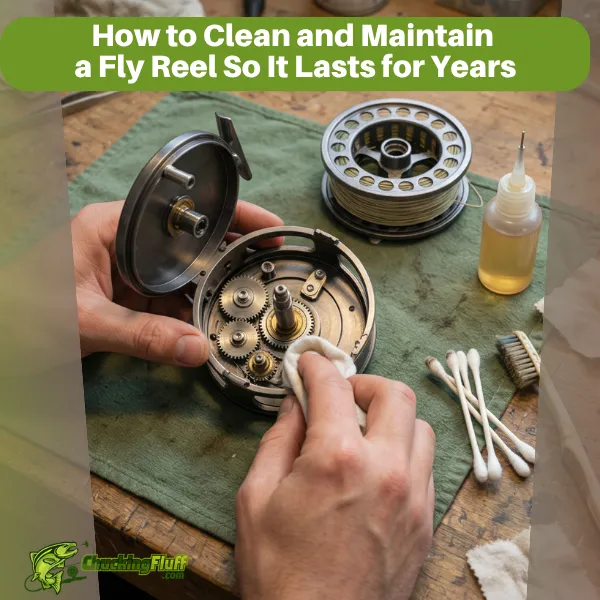
How to clean a fly reel comes down to three habits: rinse it with fresh water and dry it after every trip, wipe and lightly lubricate it during a seasonal deep clean, and loosen the drag before storage. Use mild soap and a soft cloth, never soak a sealed reel, and go easy on oil.
This guide covers care only. It skips buying advice and drag theory, so everything here applies whichever beginner reel is on your rod.
How often should you clean a fly reel?
Rinse and dry your reel after every trip, give it a deeper clean once a season, and prepare it properly before long storage. Most reels need very little, but the small jobs only work if they are done regularly.
|
When |
What to do |
Time needed |
|---|---|---|
|
After every trip |
Rinse with fresh water, wipe, air dry |
About 5 minutes plus drying |
|
After saltwater or heavy mud |
Rinse thoroughly the same day, dry fully |
10 minutes |
|
Once a season |
Remove the spool, clean the frame, lubricate lightly |
20 to 30 minutes |
|
Before storage |
Dry completely, loosen the drag, store cool and dry |
5 minutes |
If you fish only a handful of times a year, the seasonal clean can double as your pre-storage clean.
What do you need to clean a fly reel at home?
You need very little, and most of it is already in your house. A reel is a simple mechanism, so the aim is removing grit and moisture rather than rebuilding anything.
- A bowl or sink of lukewarm fresh water
- Mild dish soap
- A soft toothbrush or small paintbrush
- A lint-free cloth or microfiber towel
- Cotton swabs for tight corners
- A small amount of reel-specific oil or grease
- Your reel’s manual, or the maker’s care page, if you can find it
Reel lubricant is the one item worth buying on purpose. A small tube of grease or a bottle of oil made for reels lasts a very long time because you use so little per clean, and it is a better choice than a household spray.
How do you rinse and dry your reel after every trip?
Rinse the reel under gentle, lukewarm running fresh water, then dry it before it goes back in its case. Sand, silt and pond scum are what wear a reel down, and moisture trapped inside a closed case causes corrosion.
- Loosen the drag a few clicks so you are not rinsing a tightly clamped mechanism.
- Hold the reel under a gentle stream of water, spinning the spool a few times so water reaches the gaps.
- Brush away any visible dirt around the spool edge and the foot of the reel with the soft brush.
- Shake off the excess water and wipe the whole reel with the cloth.
- Leave it out of its case to air dry, away from direct heat, until it is completely dry.
- Wipe down the line on the way back onto the spool if it is dirty, since line carries grit straight into the reel.
Avoid hot water and high-pressure sprays. Heat can affect some seals and finishes, and pressure can push grit deeper into the reel instead of rinsing it out.
How do you deep clean a fly reel once a season?
Take the spool off the frame, clean both parts, check for wear, and lubricate lightly before putting it back together. Reel designs vary, so look up how your model’s spool releases before you start. Most have a latch, button or center screw.
- Remove the spool from the frame. The line can stay on it.
- Wipe the inside of the frame and the center post (the spindle the spool sits on) with a damp cloth, using a swab for corners.
- Use a drop of mild soap on the cloth for grease and grime, then wipe again with a clean damp cloth to remove any soap residue.
- Brush out the area around the drag knob and the click mechanism gently without forcing anything open.
- Check the spool for dents, burrs or cracks, and the line for knots or flat spots.
- Dry every part fully before applying any lubricant.
- Reassemble, then spin the spool and listen for smooth, even movement.
Only open the drag assembly itself if your manual says you can. Sealed drag systems are built to be left alone, and taking one apart without instructions is a common way to end up with a reel that will not go back together.
Should you lubricate a fly reel, and with what?
Yes, but only a little, and only on the parts the maker intends to be lubricated. Typically that means the spindle and any metal-on-metal moving contact points. Use a lubricant made for reels, or the one your manufacturer recommends.
A tiny amount is enough. Put one drop of oil or a thin smear of grease on the spindle, then spin the spool to spread it. Wipe away anything that squeezes out.
Keep lubricant off the drag surfaces unless your manual says otherwise. Many drag systems are designed to run dry or with a specific grease, and a stray drop can make the drag slip or behave unevenly.
Skip general-purpose penetrating sprays. They are made to loosen rusted bolts, not to protect a reel, and they can strip out the grease that is already there while attracting dirt.
What do you do after fishing in saltwater or muddy water?
Rinse the reel the same day, and do it more thoroughly than your usual routine. Salt dries into crystals that corrode metal and can seize moving parts, and mud holds fine grit that scratches finishes and bearings.
For saltwater:
- Rinse under lukewarm fresh water as soon as you can, spinning the spool so water gets between the spool and the frame.
- Take the spool off and rinse both parts separately if the model allows it.
- Dry completely before storing, then wipe with a lightly damp cloth the next day to catch any salt that surfaced.
- Check your reel’s manual to see whether it is rated for saltwater. A reel built for freshwater needs extra attention and may wear faster in salt regardless of how well you rinse it.
For muddy or silty water:
- Take the spool off at the end of the trip if you can, so you can clean the inside of the frame.
- Wipe out silt with a damp cloth before it dries into a crust.
- Brush grit from the edges of the spool and the foot of the reel.
How should you store a fly reel between seasons?
Dry it completely, loosen the drag, and keep it somewhere cool, dry and out of direct sunlight. Storing a reel damp is the quickest way to find corrosion in spring.
- Loosen the drag. Backing the knob off relieves pressure on the drag parts so they do not sit compressed for months.
- Dry the line. If your line got wet on the last trip, let it dry on the spool in open air before putting the reel away.
- Use a breathable case. A padded pouch works well. A sealed, wet neoprene case does not, because it holds in moisture.
- Pick the right spot. A closet or shelf indoors beats a garage, shed or car trunk, where temperature swings and damp are worse.
- Check it before the next season. Spin the spool, test the drag, and look over the line before your first trip.
What mistakes shorten a fly reel’s life?
Most reel problems come from a short list of avoidable habits. Fixing these matters more than any special product.
- Soaking a sealed reel. Submerging it forces water and grit into seals and bearings. Rinse it under running water instead.
- Over-oiling. Excess oil collects dust and sand and can leak onto drag surfaces, so a drop is enough.
- Putting it away wet. Moisture and a closed case lead to corrosion.
- Leaving the drag cranked down. Constant compression can wear drag parts unevenly over months of storage.
- Using harsh chemicals. Solvents, strong cleaners and household sprays can damage finishes and seals.
- Taking apart the drag without instructions. If the manual does not cover it, leave it closed.
- Setting the reel on the ground. Sand and grit get into the spool gap, so rest it on a towel or in your bag instead.
- Banging the spool edge. A dent in the spool rim can catch the line or rub on the frame, so check it after any drop.
Frequently asked questions
Can I use soap to clean my fly reel?
Yes, a drop of mild dish soap on a damp cloth is fine for the frame and spool. Wipe it off with a clean damp cloth afterward so no residue stays behind, and keep soap out of the drag assembly.
Do I need to take the line off to clean the reel?
No. You can clean the reel with the line on the spool. Remove the line only if it is badly soiled, damaged or needs replacing, or if you want to dry it fully after a wet trip.
How much oil should I put on a fly reel?
One small drop on the spindle is usually enough, or a thin smear of grease if the maker recommends grease. If oil is visible around the spool edge after you spin it, you used too much, so wipe it off.
Is it okay to rinse a reel with the hose?
A gentle stream of fresh water is fine. Avoid a hard jet from a hose nozzle or pressure washer, because it can drive grit into the reel instead of flushing it out.
How do I know when my reel needs more than a clean?
Gritty or rough spool movement that persists after cleaning, a drag that slips or sticks, visible corrosion, or a bent spool all suggest the reel needs the manufacturer’s attention or a replacement part.
Conclusion
A fly reel will last for years with a quick rinse and dry after each trip, one light seasonal clean, and a dry, loosened-drag winter in a breathable case. Put those habits in place early and your reel will keep running smoothly for a long time.
If you are still deciding on a new fly fishing reel our buyers guide can help you decide. Once you have your reel, a small tube of reel-specific lubricant and a soft brush are the only extra items worth picking up for the care routine above.

The Best Wet Flies for Beginners, and How to Fish Them Without Overthinking It

What Is the Best Sealant To Repair Waders? Add Active Years

Replacing Leaders And Tippets: When And How To Do It
About Author
