
| Disclosure: Just to be open and honest the buttons and links you click on in the website will in most cases take you to another website where you can purchase the products I am reviewing. As an Amazon Associate I earn from qualifying purchases. |
The Best Wet Flies for Beginners, and How to Fish Them Without Overthinking It
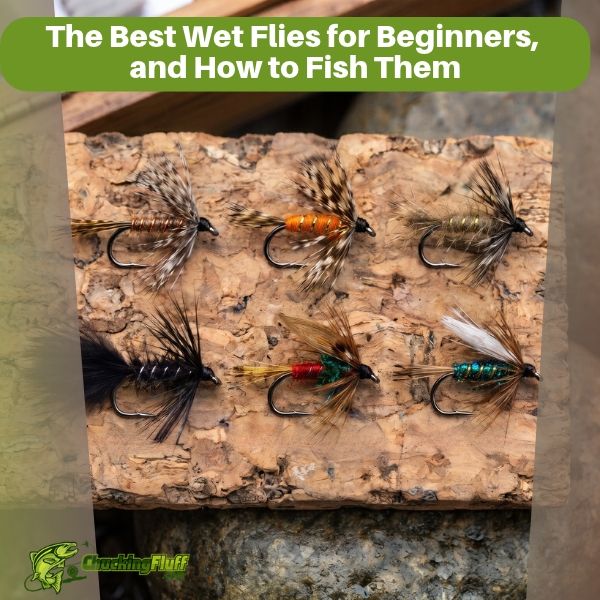
You are standing at the fly shop counter, or at the edge of a river, looking at hundreds of wet flies in dozens of colors and sizes. Almost all of them will catch fish. You need only a few, and this guide names six: what each one imitates, when to tie it on, how to fish it, and the mistake beginners make with it most often.
These are the best wet flies for beginners because they cover most situations with the least decision-making. Four of them are quiet, simple, old patterns that catch trout across a wide range of conditions. The other two cover the cases they miss: deeper water, and days when nothing is hatching.
What a Wet Fly Actually Is (and Why It Forgives Beginner Mistakes)
A wet fly is any fly fished below the surface. That is the whole definition. Some are tied to look like insects drowning or swimming up to hatch, some look like small baitfish or leeches, and some look like nothing in particular but trigger a bite anyway.
Wet flies, nymphs, streamers and dries: sorting the fly box
Fly shops sort flies into four groups, and the lines between them blur, so here is a working version:
- Dry flies float on the surface and imitate adult insects. You watch the fly and set the hook when a fish rises to it.
- Nymphs imitate the immature aquatic insects that live on the bottom. They are usually weighted and fished near the stream bed, often dead drifted.
- Wet flies traditionally imitate insects drowning, hatching or swimming in the water column. They are usually lightly dressed, with soft materials that move in the current, and fished with a swing or a gentle drift.
- Streamers imitate baitfish, leeches and crayfish. They are larger and fished with movement.
In practice, many “wet fly” boxes include nymphs and streamers, because all of them are fished underwater. The six flies below include one streamer (the Woolly Bugger) and one nymph (the Prince Nymph), because a beginner’s box that skips them would leave gaps.
Why fishing under the surface suits new anglers
Trout feed below the surface far more often than on it. Most of their food, including nymphs, pupae, small crustaceans and baitfish, is underwater. A dry fly works only when fish are rising, while a wet fly works whether or not anything is hatching.
Wet flies are also easier on technique. A dry fly needs a drag-free float on the surface, and a visible drag mark on the water tells the fish it is fake. A wet fly can be fished by casting across the current and letting the water move it. The current does most of the work, and a swinging fly looks alive without any skill from you.
Strikes are another advantage. When a fish takes a swung wet fly, the line comes tight against the current, so the fish often hooks itself. A beginner who is slow to react on a dry fly can still land fish on a swing.
What to Look for Before You Buy Any Wet Fly
Fly shops sell wet flies by the dozen in many dressings, and prices and quality vary. Your first box does not need the best hand-tied flies. It needs flies that are tied well enough to survive a few fish and a few snags.
Hook size, weight and materials that matter
Size. Most wet flies for trout are tied on hooks in the range of sizes 10 to 16. A larger number means a smaller hook, so a size 16 is smaller than a size 10. For a first box, sizes 12 and 14 cover most trout water. Buy a few in 10 or 16 once you know what you are fishing.
Weight. Wet flies tied without a bead or lead sink slowly, which suits a swing in shallow or moderate water. Flies with a bead head or wire wrapped under the body sink faster and suit deeper or quicker water. Buy a mix, because you will need to change depth, and a fly of the right pattern at the wrong depth will not catch fish.
Materials. Soft, mobile materials are the point of a wet fly. Look for:
- Soft feather collars (partridge, hen or similar) that pulse in the current.
- Dubbing that looks a little rough and buggy, not slick.
- Thread and wire that are wrapped neatly and finished with a clean head, so the fly does not unravel on the first fish.
Check the hook point on any fly you buy. A fly with a bent or dull point is wasted money.
Colors and profiles that cover most water
Trout food in most rivers is small, drab and natural: browns, olives, tans, grays and blacks. Slim, soft flies in those colors match most of it. A dash of orange, red or peacock green works as an attractor, a spot of color that draws a look.
Aim for a spread of profiles rather than many versions of one: one slim and sparse, one buggy and rough, one large and moving, one bright and showy. The six flies below follow that logic.
Six Wet Flies Worth Putting in Your First Box
Soft Hackle Pheasant Tail
What it imitates: An emerging mayfly nymph or a caddis pupa rising to the surface. The pheasant tail body is slim and brown, and the soft collar moves like legs or wings struggling free.
When to tie it on: When you see insects hatching or fish rising and cannot tell what they are eating. It is also a reliable pick when you have no information at all.
How to fish it: Cast across the current and let the fly swing downstream on a tight line. Let it drift for a moment first, so it sinks, and then let the current carry it round. You can also dead drift it with no tension, like a drowned insect.
Why this one: It looks like a lot of different foods, and a lot of different foods are what trout eat.
Common mistake: Stripping it back fast. A soft hackle should drift or swing slowly. If you retrieve it fast, it stops looking like an insect.
Partridge and Orange
What it imitates: A small hatching insect, in general terms. Orange silk and a gray partridge feather collar look like a variety of caddis, small stoneflies and mayflies. It is a classic from the old “spider” tradition, tied sparse on purpose.
When to tie it on: In moving, medium-depth water in spring and summer, particularly when you see small insects around.
How to fish it: Cast quartering downstream and let it swing across the current. Keep the rod tip low and follow the fly round, then let it hang for a few seconds at the end of the swing.
Why this one: The dressing is minimal, so it is simple to tie and cheap to buy. It shows how little a wet fly needs.
Common mistake: Using tippet that is too heavy. A sparse, light fly fished on thick tippet swings stiffly, and fish will notice. Match your tippet to the hook size (more on that below).
Hare’s Ear Wet Fly
What it imitates: A drowned or drifting insect, a small crustacean, or a nymph. The shaggy dubbing from a hare’s mask looks buggy and alive, and when wet, the fibers catch light and trap air bubbles.
When to tie it on: Whenever you are not sure. It is a general-purpose fly, and many anglers keep one tied on as a default.
How to fish it: Dead drift it just above the bottom, or swing it slowly through a run. Both approaches catch fish.
Why this one: It is the most forgiving pattern in the fly box. It is rough, a bit scruffy, and fish do not seem to mind.
Common mistake: Brushing it out neatly or picking a slick-looking version. The rougher the dubbing, the more it moves in the water.
Woolly Bugger
What it imitates: A leech, a baitfish, a crayfish or a large nymph, depending on color and how you move it. This is a streamer, and it behaves differently from the rest of the box.
When to tie it on: In deeper pools, on slow water, on stillwater, in off-color water and whenever you want to cover water quickly. Black and olive are the dependable colors, and a size 8 or 10 is a sensible starting point.
How to fish it: Swing it across the current, or cast it out and retrieve with short strips, pausing between them. Pauses matter because the marabou tail swims and pulses when you stop pulling.
Why this one: It catches trout, bass, panfish and more. If you only fish one fly on a day when nothing else works, this is a good choice.
Common mistake: Stripping it in a straight, fast line. Vary the speed. Most fish hit it on the pause or the change of pace.
Royal Coachman Wet
What it imitates: Nothing in particular, which is why it is useful. The peacock herl body, red floss band and white wing form an attractor pattern. Fish take it out of curiosity or aggression, or because it looks like something edible.
When to tie it on: When there is no hatch, the water is a bit murky, or fish are in a mood to chase something bright. It is also a popular choice on small streams and with stocked trout.
How to fish it: Swing it on a slow arc across the current, or twitch it gently as it drifts.
Why this one: It gives your box a change of pace. If your natural-looking flies are not working, a splash of red and white can change the result.
Common mistake: Expecting it to match a hatch. It is an attractor. Use it to provoke a strike, and switch to a softer imitation if fish ignore it. Peacock herl is also fragile, so check the body after a few fish.
Prince Nymph
What it imitates: A stonefly nymph or a general aquatic nymph. The peacock herl body, biot tails and white wing-like horns give it a recognizable silhouette that many trout seem to like.
When to tie it on: When fish are holding deep, in faster or heavier water, or when you want to get a fly down quickly. A bead head version sinks faster, and a good size to start with is 12 or 14.
How to fish it: Cast upstream or across and let it dead drift near the bottom. Keep your line slack enough that the fly sinks, but tight enough to feel a take.
Why this one: It reaches depths the lighter patterns cannot reach. It complements the soft hackles on your leader.
Common mistake: Fishing it too shallow. A nymph that drifts above the fish is a nymph the fish never sees. If you are not occasionally touching bottom, add weight or lengthen the distance between fly and indicator or split shot.
How to Fish Wet Flies: The Swing, the Dead Drift and the Hang-Down
Three techniques cover almost everything you will do with the flies above.
The swing. Cast across the stream at roughly 45 degrees downstream. Let the line settle and the fly sink, then let the current pull the fly around in an arc until it is directly downstream of you. Keep the rod tip low and pointed at the fly, and keep light tension on the line. Take a step downstream and cast again. That sequence, repeated through a run, covers the water methodically.
The dead drift. Cast upstream or across and let the fly drift at the speed of the current, with no pull from the line. This takes a bit more attention, since you have to mend the line (flip a bit of line upstream) to stop the current dragging the fly. It works well with weighted flies like the Prince Nymph and Hare’s Ear.
The hang-down. At the end of the swing, when the line is straight below you, stop. Leave the fly hanging in the current for a few seconds. The fly rises toward the surface, which looks like an insect heading up to hatch. Many strikes come right here, so do not rush to pick up and recast.
Reading the current so your fly lands where fish wait
Fish rest in slow water close to fast water, where food is delivered without much effort. Cast to these places:
- Seams, the lines where fast and slow currents meet.
- Tailouts, the shallow, smooth ends of pools.
- Behind rocks and logs, where the current slows.
- Inside bends and the edges of deeper channels.
- Undercut banks, with a swing that passes close to the bank.
Pick one spot, make several casts, and if nothing happens, move on. A fish that wants your fly will usually take it in the first few passes.
The strike you will feel, and the one you will miss
On the swing, a take often feels like a firm tug or a sudden stop, as if the fly caught a weed. Sometimes the line just tightens and does not give. The right response is to lift the rod calmly or simply tighten the line, not to yank. A big hookset breaks light tippet, and because the current is already pulling against the fish, it often hooks itself.
On a dead drift, watch for the line to hesitate, twitch or move upstream against the current. If you see that, lift.
The most common missed strike is the one you flinch at. A swirl or a flash near your fly makes many beginners snatch the rod up and pull the fly away from the fish. If you see a swirl, keep the line tight and let the fish turn on the fly.
Simple Rigs and Leaders for Your First Day on the Water
Keep the setup plain. A trout rod and reel you already have will work for all of these flies, and a 4 to 6 weight outfit is common for trout.
Leader. A tapered leader of about 7.5 to 9 feet is a good starting point. A longer leader gives a more natural presentation, and a shorter one is easier to cast in tight spots.
Tippet. Add a length of tippet to the end of the leader. A rule of thumb is to divide the hook size by three to find the tippet size, so a size 12 fly suits 4X tippet and a size 16 suits 5X. A size 8 Woolly Bugger suits something heavier, around 3X. Tippet that is too heavy stiffens the fly’s movement, while tippet that is too light breaks on larger fish.
Weight. For flies that need to get down, add a small split shot on the tippet, roughly a foot or so above the fly. Add or remove shot until the fly is drifting near the bottom, and check that your fly occasionally ticks the stream bed.
Indicator. For dead drifts, a small strike indicator on the leader helps you see takes. You can leave it off for swinging.
Two flies. Many anglers fish a second fly on a short dropper tied to the bend of the first. Check local regulations first, because some waters limit the number of flies you can use, and some require barbless hooks or restrict bait and hook types. Read the regulations for the water you plan to fish.
Tie a few spare leaders and keep extra tippet in your pocket. You will lose flies. That is normal and a sign that you are fishing near fish.
Five Beginner Mistakes That Cost You Fish
- Buying too many patterns. A box with 40 different flies slows you down because every change becomes a decision. Start with the six above in a few sizes and learn how each behaves.
- Fishing too fast. A fly dragged across the current looks unnatural. Slow the swing by mending your line upstream or casting at a steeper downstream angle, and let the fly drift or hang at the end.
- Fishing too shallow. Trout often hold near the bottom, especially in cold or fast water. If you are not getting bites, add weight or switch to a bead head before changing patterns.
- Using heavy tippet. Thick line restricts the fly’s movement and is more visible. Match the tippet to the hook size and tie solid knots, since a poor knot loses a fish and a fly together.
- Picking up too early. Many fish take at the end of the swing or during the hang-down. Let the fly finish its arc and hang for a few seconds before you lift the line to recast.
Your Starter Wet Fly Box in One Paragraph
A sensible first box holds the Soft Hackle Pheasant Tail, Partridge and Orange and Hare’s Ear Wet Fly in sizes 12 and 14 for general swinging and drifting, a Woolly Bugger in black or olive in size 8 or 10 for deeper and slower water, a Royal Coachman Wet in size 12 or 14 as an attractor for days when nothing is hatching, and a bead head Prince Nymph in size 12 or 14 for getting down in faster water. Two or three of each is enough to start, since you will lose some to snags. Pair them with a 7.5 to 9 foot tapered leader, a few spools of 3X to 5X tippet and a handful of split shot.
Five Questions Beginners Ask About Wet Flies
How many wet flies do I need in my first box?
Six patterns with two or three of each is plenty. That gives you spares for snags and a few size options without overwhelming the box. Add patterns only after you have a reason, such as a fly you keep seeing other anglers use on your water.
What is the difference between a wet fly and a nymph?
Both are fished underwater. A nymph is tied to imitate the immature, bottom-dwelling stage of an aquatic insect and is usually weighted and fished deep. A wet fly is traditionally lighter and sparser, tied to look like an insect drowning, swimming or hatching, and is often swung through the current. Many anglers use the terms loosely, and the Prince Nymph and Hare’s Ear are used both ways.
Do I need a special rod for wet fly fishing?
No. A standard trout outfit works for all of these flies. A rod in the 4 to 6 weight range, a matching reel and line, and a tapered leader are enough to start. Specialized rods can help later, but they do not change how the basic techniques work.
Can I catch fish other than trout with these flies?
Yes. The Woolly Bugger is a well-known fly for bass and panfish as well as trout, and the smaller wet flies catch panfish in many waters. Check local regulations and consider the species you can legally keep and release.
What should I do if I am not getting bites?
Change one thing at a time. First check depth: add split shot or switch to a weighted fly. Then check speed: slow the swing or mend the line. Then change the fly, moving between a natural pattern like the Hare’s Ear and an attractor like the Royal Coachman. Finally, move to different water, since fish are not evenly spread through a river and a spot with no bites after several passes is usually worth leaving.

Replacing Leaders And Tippets: When And How To Do It

Tying Your Own Flies: A Comprehensive Beginner’s Guide
Beginner Fly Fishing Tips
About Author
