
| Disclosure: Just to be open and honest the buttons and links you click on in the website will in most cases take you to another website where you can purchase the products I am reviewing. As an Amazon Associate I earn from qualifying purchases. |
Beyond The Number On The Fly Rod Blank : The Real Guide to Matching Fly Lines to Modern Rods
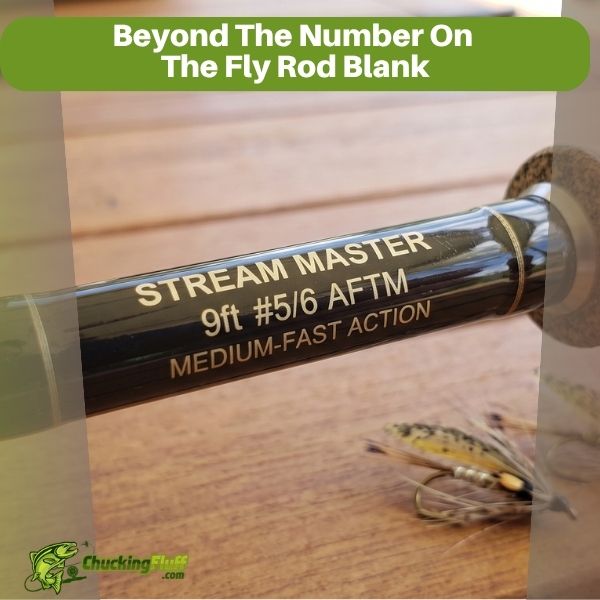
You bought a 5-weight rod. You bought a 5-weight line. On paper, that’s a match made in heaven. So why does your cast feel mushy, your loops collapse at 40 feet, and your line just won’t turn over the way it did on the shop’s demo rod?
Here’s the uncomfortable truth: that little number stamped on your rod blank has been quietly lying to you for years. Not maliciously — it’s more like a nickname that stuck around long after it stopped describing reality. And if you want to actually understand how fly lines and rods are supposed to work together, you need to stop trusting the number and start trusting the science underneath it.
Let’s dig into what’s really going on.
Why “Just Match the Number” Doesn’t Work Anymore
The Myth of the Simple Line Weight System
For decades, fly fishing operated on a beautifully simple assumption: a 5-weight rod wants a 5-weight line, full stop. Match the numbers, cast happily ever after. It’s the kind of clean, tidy rule that makes for great marketing and terrible fishing outcomes.
Here’s the problem. That number was never a precise physical measurement of “this rod needs exactly this much mass to flex correctly.” It was — and still is — a recommendation. A best guess from an engineer somewhere, based on how a particular rod loaded during testing with a particular line, on a particular day. Two rods can carry the same “5wt” stamp and want genuinely different amounts of grain weight to load properly. It’s a little like how two pairs of “size 10” shoes from different brands can fit completely differently. The label gives you a starting point, not a guarantee.
How Rod Design Has Outpaced the Old Rules
Rod technology hasn’t stood still, but the labeling system mostly has. Modern blanks are built from advanced graphite and composite materials that are stiffer, lighter, and faster-recovering than anything anglers cast a generation ago. Fast-action rods, in particular, have reshaped the entire conversation.
Think about it this way: an old-school slow-action rod is like a wet noodle — it bends generously through its whole length, and it doesn’t need much mass to get moving. A modern fast-action rod is more like a diving board with a stiff hinge near the tip. It needs a real jolt of mass to flex at all, especially at short range. That jolt often has to come from a heavier line than the number on the rod suggests. The old rating system was built for noodle rods. Fast rods play by different physics, and the number on the blank hasn’t caught up.
Understanding AFTM/AFFTA Ratings From the Ground Up
What the Rating Actually Measures
Let’s back up and define our terms, because a lot of confusion starts here. AFTM stands for the Association of Fishing Tackle Manufacturers; in the U.S., the same system is now maintained by the American Fly Fishing Trade Association (AFFTA). It’s an industry standard that assigns fly lines a number — 3, 5, 8, whatever — based on weight.
But here’s the part almost nobody explains clearly: the rating doesn’t measure the whole line. It measures a specific chunk of it.
The 30-Foot Rule and Why It Matters
The AFTM/AFFTA standard weighs only the first 30 feet of the fly line, excluding any level tip section, and assigns it a grain-weight range. That range is what determines whether a line is labeled a “4,” a “6,” or an “8.” This made a lot of sense back when most lines had a fairly standard, gently tapered front section. Weigh the front 30 feet, slap on a number, done.
The trouble is that not every line concentrates its weight the same way within those 30 feet. Some lines pack extra mass into a short, aggressive front taper to load rods quickly at close range. Others spread the weight out more gradually. Two lines can technically fall within the same numbered class and still feel wildly different in hand and in the air, because the standard measures a total weight, not a distribution.
The Real Secret: Grain Weight Over Line Number
What Is Grain Weight, Exactly?
If the number on the box is the nickname, grain weight is the real name. A grain is a unit of mass — literally the same grain used in ammunition and archery — and it’s the actual, physical measurement of how much a given section of fly line weighs.
Instead of asking “is this a 5-weight line?” the better question is “how many grains does the first 30 feet of this line weigh, and is that what my rod actually wants?” That’s the real matching standard hiding underneath the simplified number system.
How to Find the Grain Weight of Your Line
So how do you get your hands on this information?
Reading Manufacturer Specs
Good news: you often don’t have to guess. Many manufacturers now publish the actual grain weight of their lines’ front sections right on the box or spec sheet, precisely because so many anglers got burned by the “just match the number” approach. Some rod companies have followed suit, printing a grain-weight window on the rod itself or in their catalog — essentially saying, “Forget the line-weight label, here’s the actual range this blank wants to see.”
Weighing Your Line Yourself
If that information isn’t available, you can measure it yourself. Anglers who want precision will cut the first 30 feet of a line and weigh it on a digital scale (a reloading or archery scale calibrated in grains works well), then compare that number to the AFFTA reference chart or to a rod manufacturer’s stated grain preference. It’s a bit of extra homework, sure, but it turns guesswork into genuine data.
Why Modern Fast-Action Rods Break the Old Rules
Understanding Rod Action and Load
“Action” describes where along its length a rod bends. A slow-action rod flexes deep into the butt section — smooth, forgiving, easygoing. A fast-action rod barely bends at all until you get near the tip, and then it snaps back with authority. That crispness is fantastic for distance and wind, but it comes with a catch: fast rods need a certain amount of mass moving through the guides before they’ll load properly, especially in tight casting situations like short dry-fly presentations under a tree canopy.
Picture trying to bend a stiff fishing rod with a feather versus a bowling ball. Neither extreme works — but the point is that stiffness changes how much mass you need to create meaningful flex. That’s exactly what’s happening between fast rods and standard-weight lines.
The Case for “Overlining” Fast Rods
This is where “overlining” comes in — deliberately fishing a line one size heavier than the rod’s printed rating. It sounds like breaking the rules, but it’s really just correcting for the rules being outdated. A fast 5-weight rod overlined with a true 6-weight (or a 5-weight line that’s built heavy for its class) will often load more smoothly at short and medium range, load faster in tight loops, and feel noticeably less stiff and clunky in the hand.
This isn’t a universal law — some rods are genuinely well-matched to their stated line weight, and overlining a rod designed for distance casting can hurt your long-range performance. But it’s common enough with modern fast blanks that it deserves serious consideration rather than dismissal.
How to Match Your Line to Your Rod’s True Preference
Step-by-Step Matching Process
Here’s a practical approach that skips the guesswork:
- Start with the manufacturer’s grain window, if published, for both your rod and your candidate lines.
- If no grain data exists for your rod, start with the labeled line weight and treat it as a starting point, not gospel.
- Cast a couple of options — same nominal weight, different actual grain weights — and pay attention to how quickly the rod loads at 20, 30, and 50 feet.
- Note how the rod tip loads at short range. If it feels stiff and unresponsive inside 30 feet, that’s often a sign you’re underlined.
- Adjust up or down half a line size at a time until the loop shape tightens and the rod feels alive rather than sluggish.
Common Mistakes Anglers Make
The most common mistake is treating the labeled number as an unbreakable rule rather than a rough sorting bin. A close second is buying lines purely on brand reputation without checking whether that particular taper suits your particular rod’s action. And a surprisingly frequent one: blaming casting mechanics for a problem that’s actually a mismatch in grain weight. If your loops are consistently tailing or your rod feels like it’s fighting you, the line-rod pairing deserves a look before you assume it’s all technique.
Specialty Lines and Their Unique Considerations
Weight-Forward vs. Double Taper
Weight-forward lines concentrate mass in a shorter front section, which helps load rods quickly and cast farther with less false casting — but that concentrated mass also means the “same number” weight-forward and double-taper lines can behave quite differently on the same rod. Double tapers distribute weight more evenly and tend to load a rod more gradually, which some anglers prefer for delicate presentations.
Sinking Lines and Density Compensation
Sinking and sink-tip lines add another layer of complexity, because density and sink rate get baked in alongside the weight rating. A sinking line’s front section can weigh meaningfully more than a comparable floating line’s front section even at the “same” number, since the material itself is denser. That’s another reason grain weight, not the label, should guide your decision when you’re stepping outside standard floating lines.
Practical Tips for Testing Line-Rod Pairings
If you’re serious about dialing this in, try borrowing a few lines of the same nominal weight but different tapers or brands from a friend or your local shop before committing. Cast them back to back on your own rod, in your own typical fishing distances — not just bombing it out to 60 feet on an open lawn. Pay attention to how the rod feels loading a short cast, a medium cast, and a long cast, since a line that shines at one distance can feel wrong at another. And don’t be afraid to write down your impressions; memory is a poor substitute for notes when you’re comparing four or five subtly different lines over an afternoon.
Conclusion
The number on your rod blank was never meant to be the final word — it’s a starting point dressed up as a rule. Real line-to-rod matching comes down to grain weight, rod action, and how those two things interact at the distances you actually fish. Fast-action rods, in particular, often want more mass than their printed rating suggests, which is exactly why overlining has become such a common and legitimate practice rather than a beginner’s mistake. The takeaway is simple: stop assuming the label tells the whole story, start paying attention to actual grain weight and how your rod loads in hand, and be willing to experiment a half-size in either direction. That’s the real guide — and it’s the difference between a cast that merely works and one that feels effortless.
Frequently Asked Questions
1. Does overlining damage my rod?
No, overlining doesn’t damage a rod under normal casting. It changes how quickly the rod loads, but it doesn’t put the blank at meaningful risk the way, say, exceeding its stated leader or tippet strength might in extreme circumstances.
2. How do I know if my rod is “fast action” without the manufacturer saying so?
Flex the rod by hand or during a slow-motion cast and watch where the bend concentrates. If most of the bend happens in the top third near the tip, it’s fast action; if it bends smoothly through the middle or lower half, it’s more moderate or slow.
3. Can I use grain weight matching for saltwater and switch rods too?
Yes. Saltwater and switch/spey rods follow the same underlying physics, though grain windows for two-handed rods are often expressed differently (sometimes total head weight rather than the standard 30-foot AFFTA measurement), so check the specific system that rod’s manufacturer uses.
4. Is it ever wrong to overline a rod?
Yes — rods built and tuned specifically for long-distance casting can lose tip speed and distance potential if you overline them, since the extra mass that helps at short range can work against a fast, efficient long cast.
5. Do all line manufacturers publish grain weight data?
Not universally, but the trend is growing. If a specific line’s grain weight isn’t listed, you can often find community-tested data online or measure it yourself with a grain scale for a reliable answer.

How to Store Fly Fishing Rods Between Sessions

Do You Still Get Wet in Neoprene Waders?

Best Wet Flies For Beginners In The UK
About Author
